A Day Trip to Kazbegi from Tbilisi
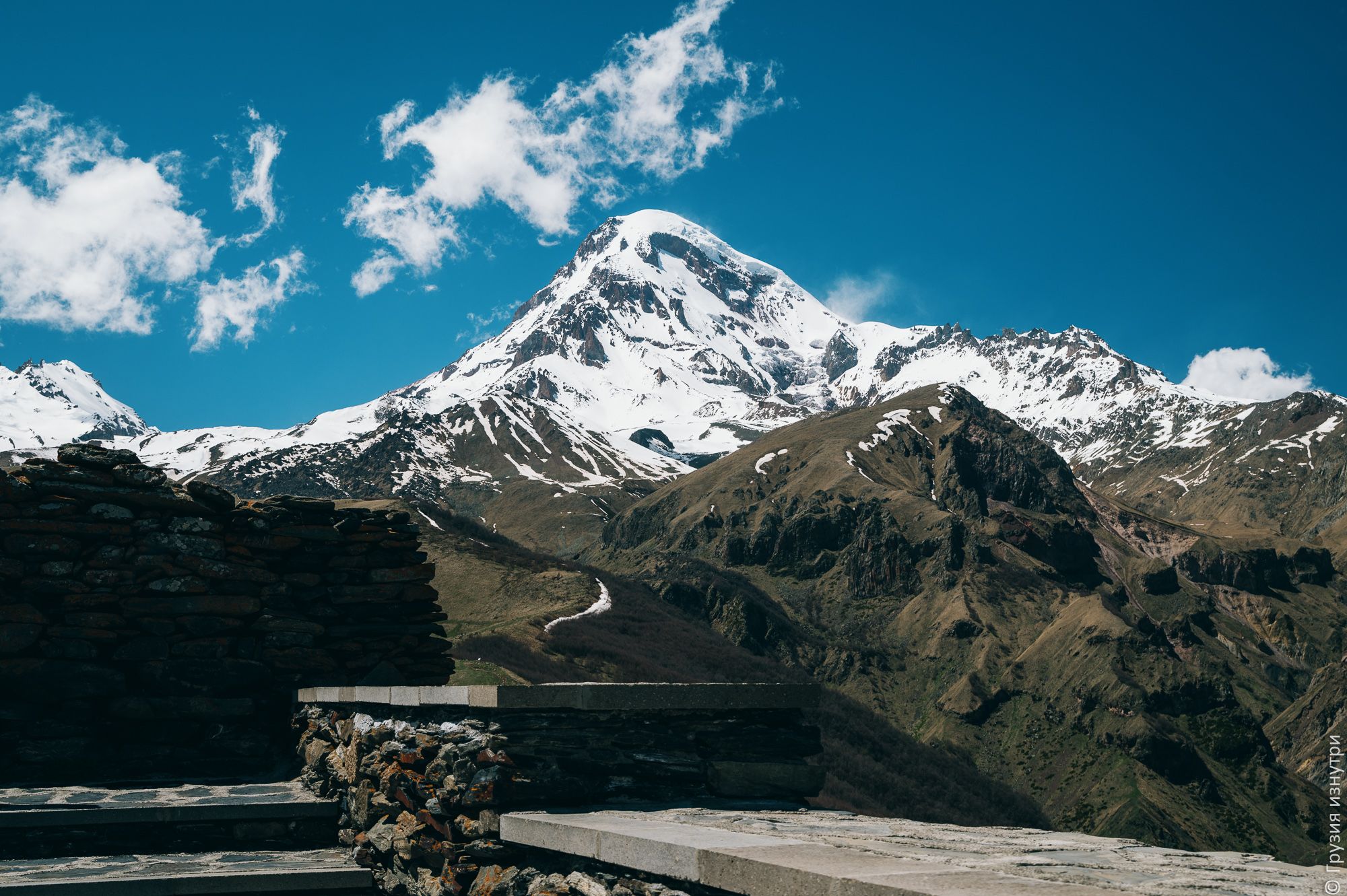
Kazbegi isn’t actually that far from Tbilisi — just 150 kilometers away. You can get there in about two and a half hours by car, which means the whole trip can fit into a single day. Even though I’d already been there before, when I was invited to go see Kazbek again, I didn’t hesitate for a second. We left early, around 9 in the morning, and got back after dark. We were tired as hell, but it was absolutely worth it.
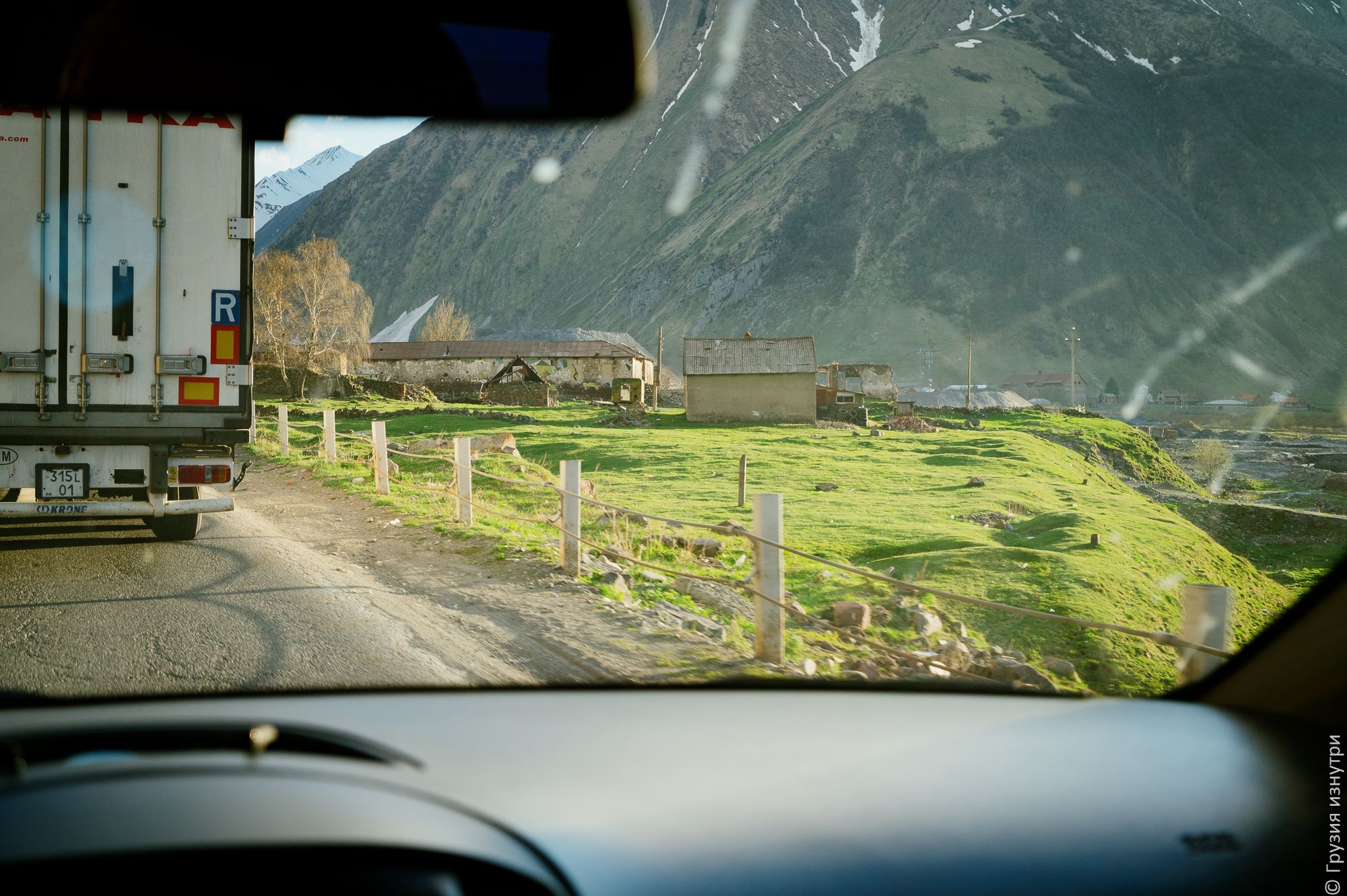
As soon as we left Tbilisi, we found ourselves on the Georgian Military Road. This road connects Tbilisi and Vladikavkaz, crosses the Greater Caucasus range, and for the most part runs through Georgia.
The route through these mountains has existed for centuries, so this is a very old road that has been rebuilt many times and has even changed course over the years. In its modern form, it’s an asphalt highway, mostly two lanes wide. The drive is incredibly scenic, especially once you get into the mountains. There is, however, one not-so-pleasant part of the experience: the huge number of cargo trucks crossing the border between Russia and Georgia.
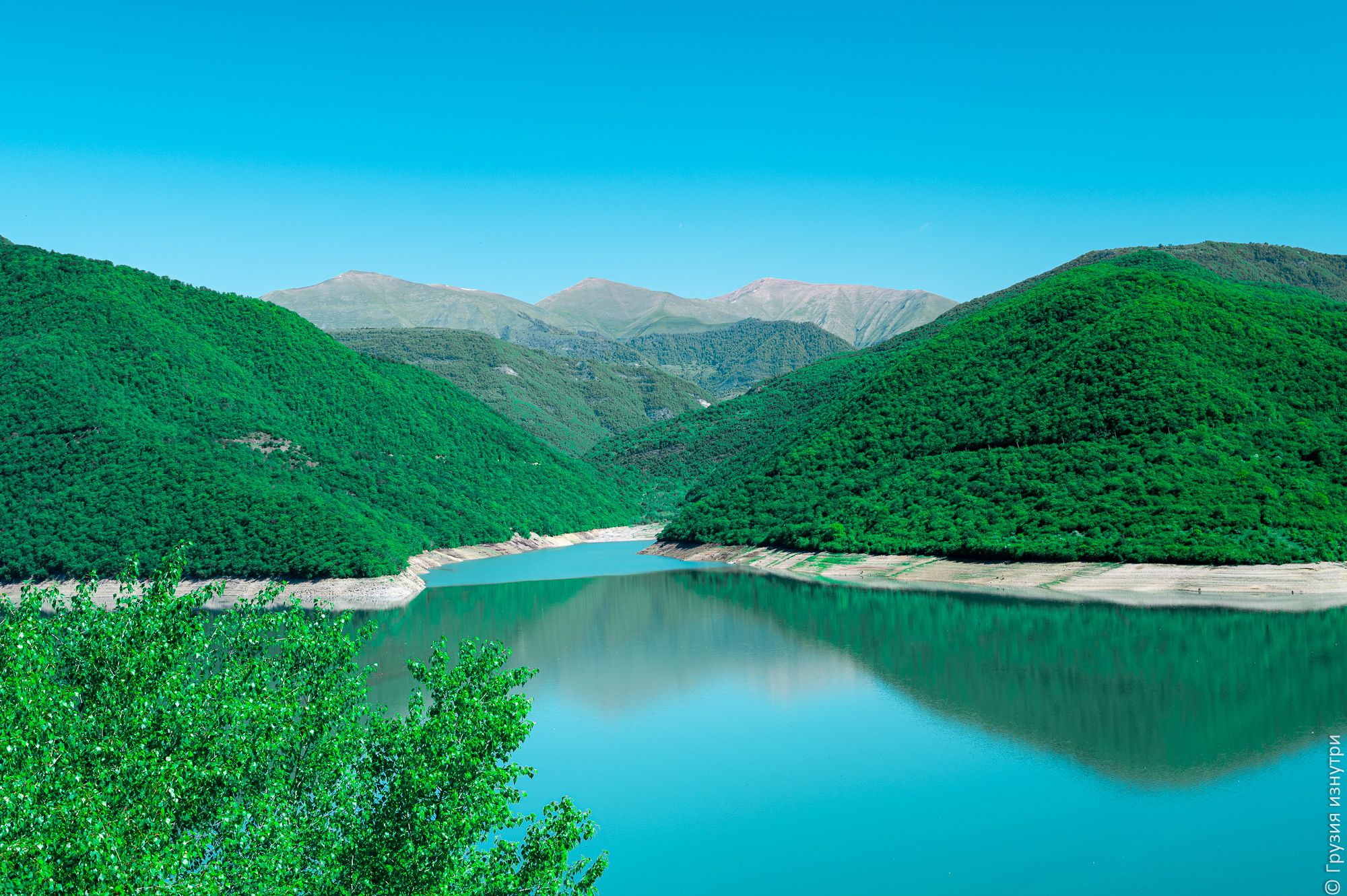
Our first stop was the Zhinvali Reservoir. The reservoir, along with the hydroelectric power station built on it, supplies water and electricity to Tbilisi and nearby towns and villages. The Georgian Military Highway runs right along its western shore, so you get a great view of it straight from the car. We pulled into one of several roadside turnouts and got out to admire the landscape.
I’d been at this exact same spot in late autumn, and the view looked completely different then.
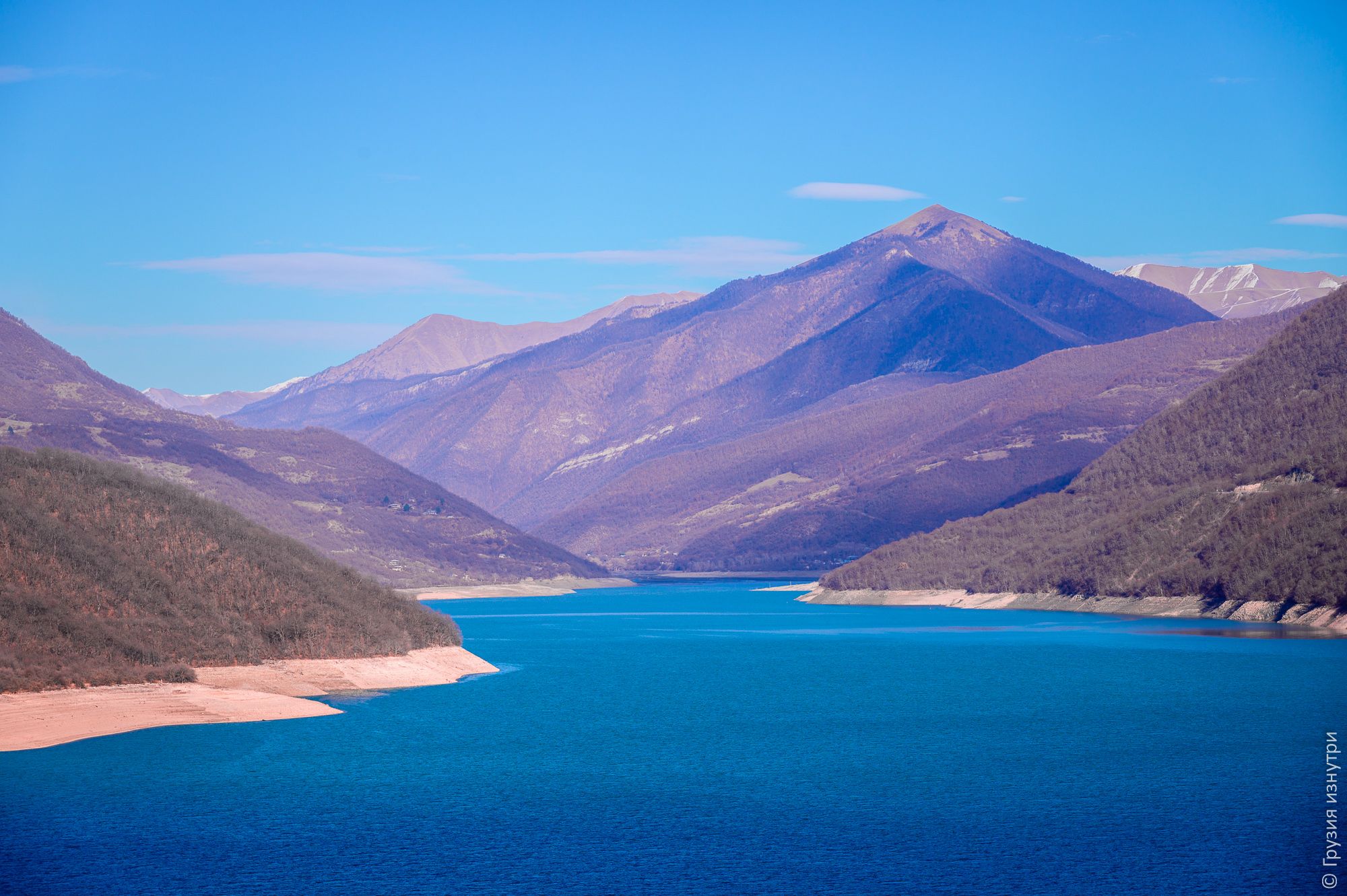
And that’s the thing about Georgia: views like this are everywhere. In summer, the mountains drown in greenery; in winter, they’re covered with snow. Cows, sheep, and horses graze in the meadows, and the landscapes are dotted with ancient monasteries, churches, and fortresses.
Our next stop was one of those fortresses: Ananuri. It’s not very large, and most of its inner grounds are taken up by a church. Back in the day, the fortress protected the inner regions from threats coming from the north and stood right on the Georgian Military Highway.
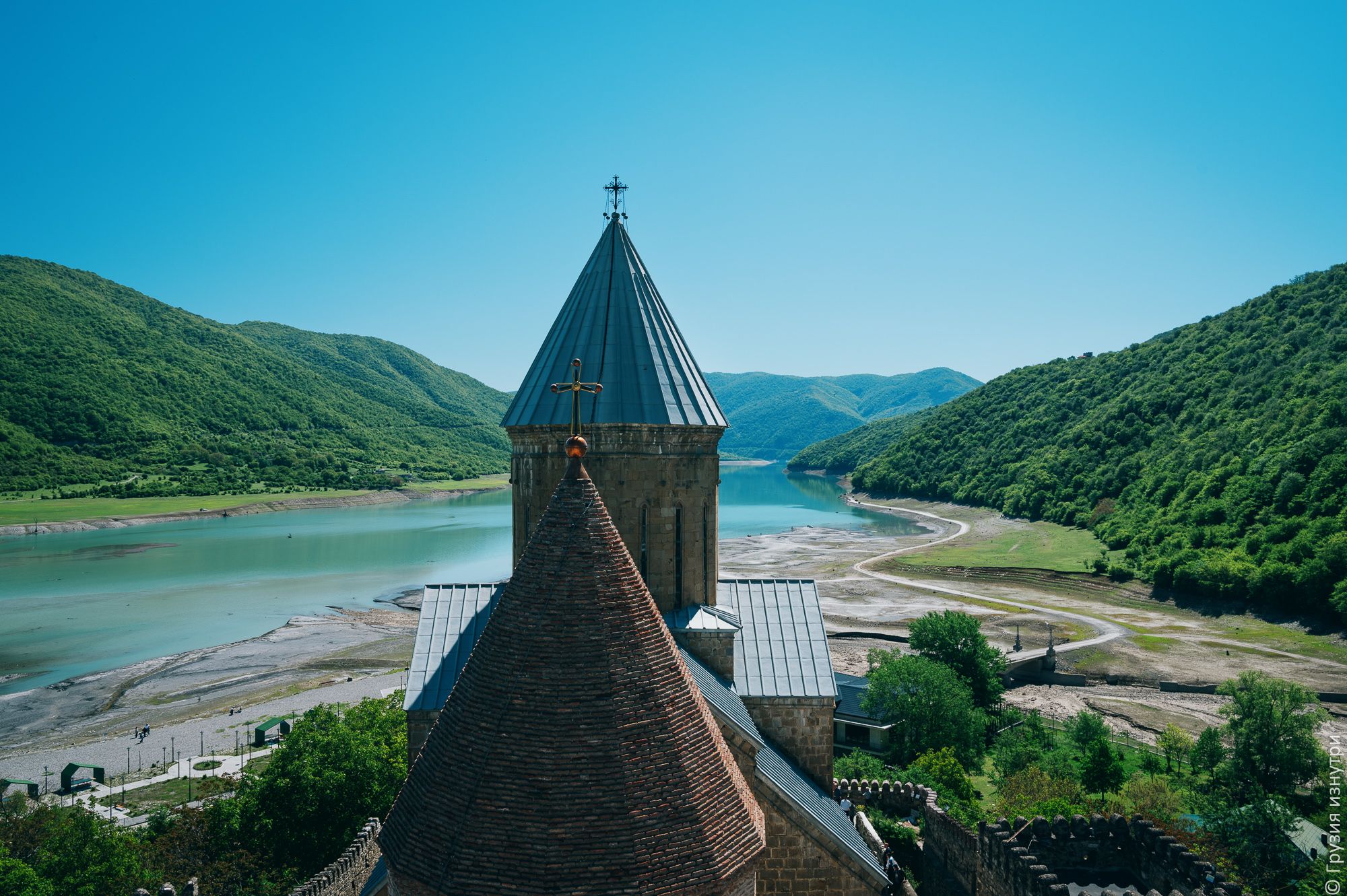
On the right side of the photo, you can actually see the old section of the road as it used to run, along with the old bridge and its little towers. That day, both the bridge and the old road were clearly visible. But when the reservoir level rises, both the bridge and the road end up completely submerged, and only the towers stick out of the water.
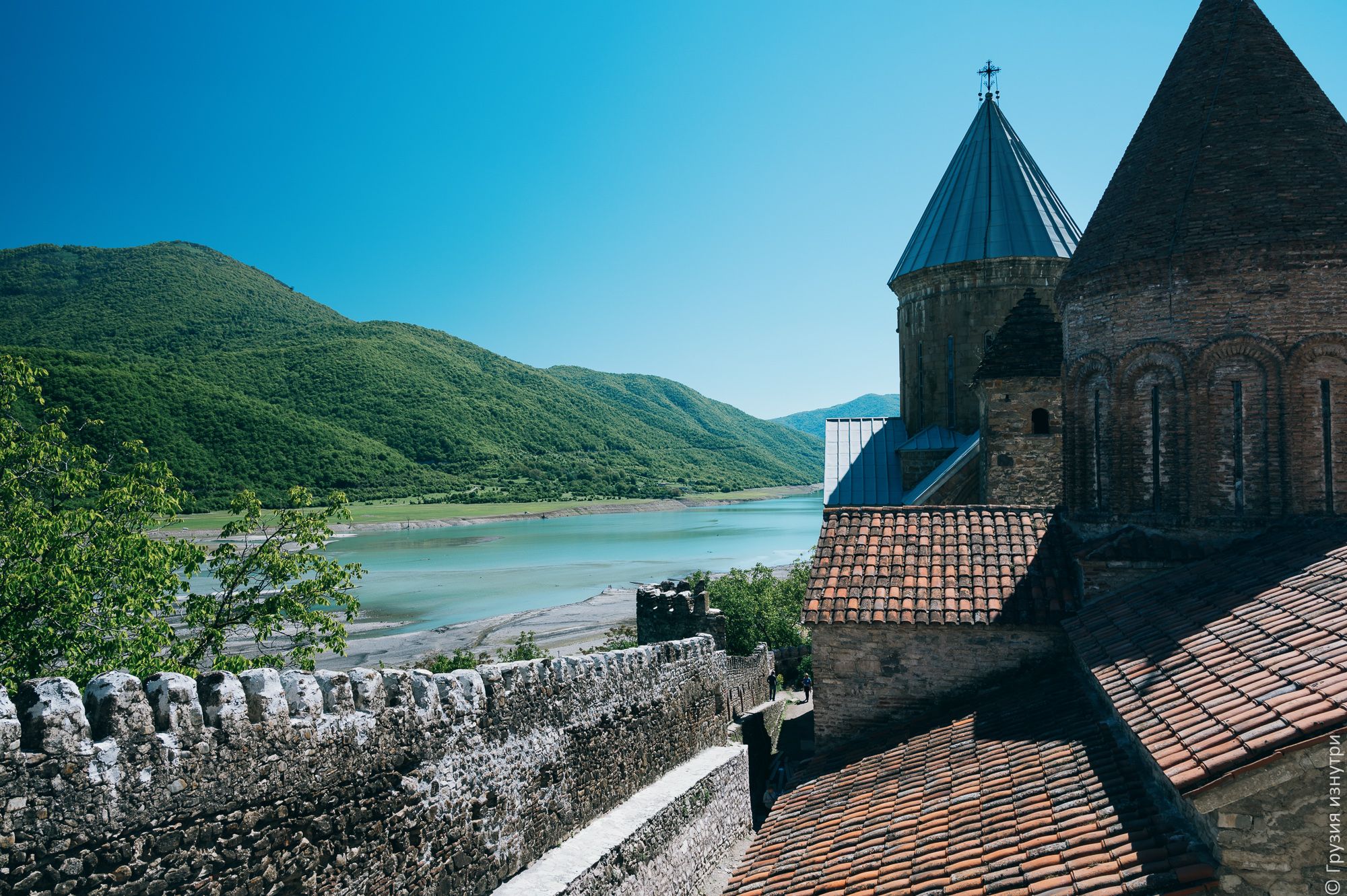
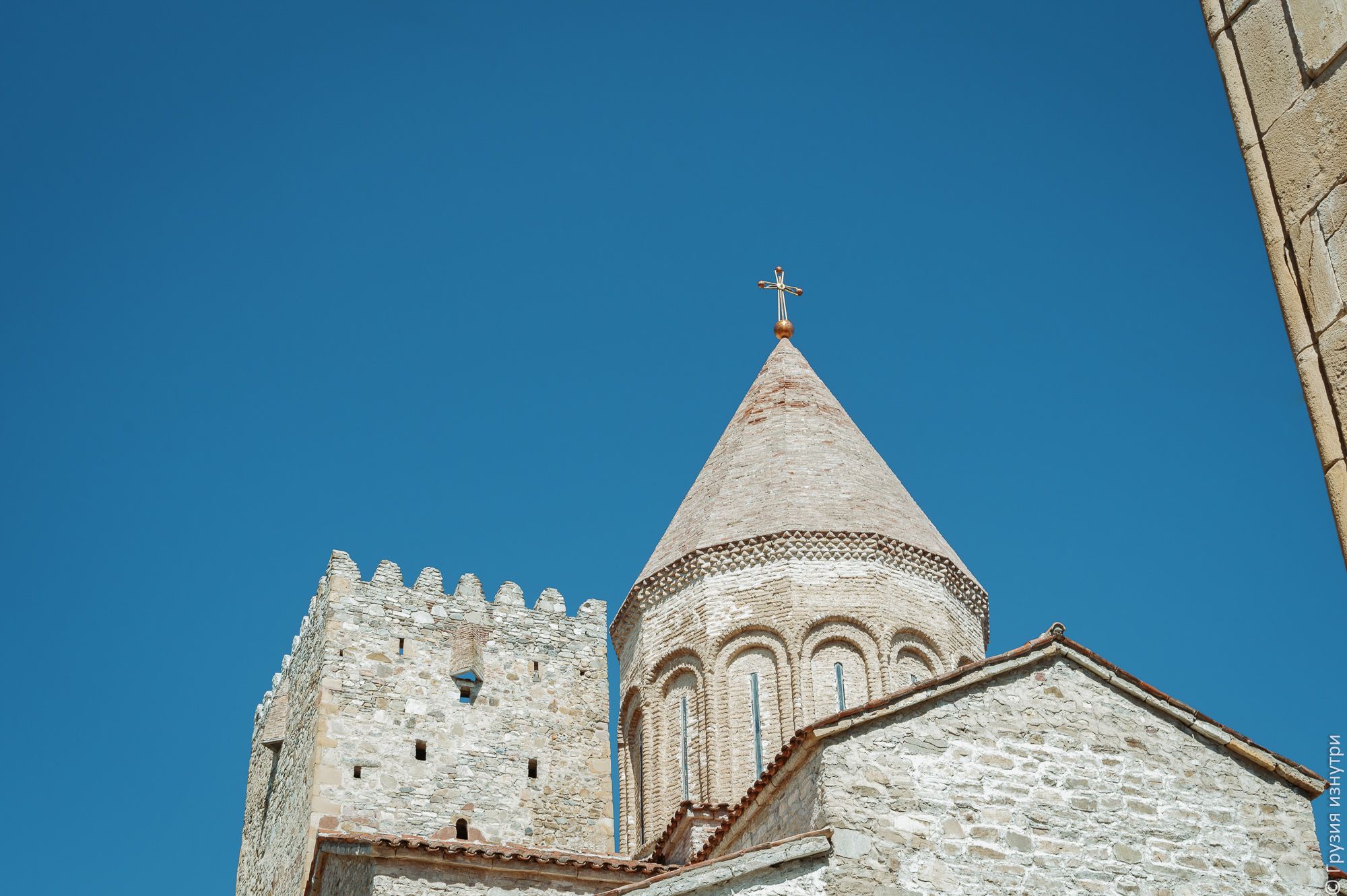
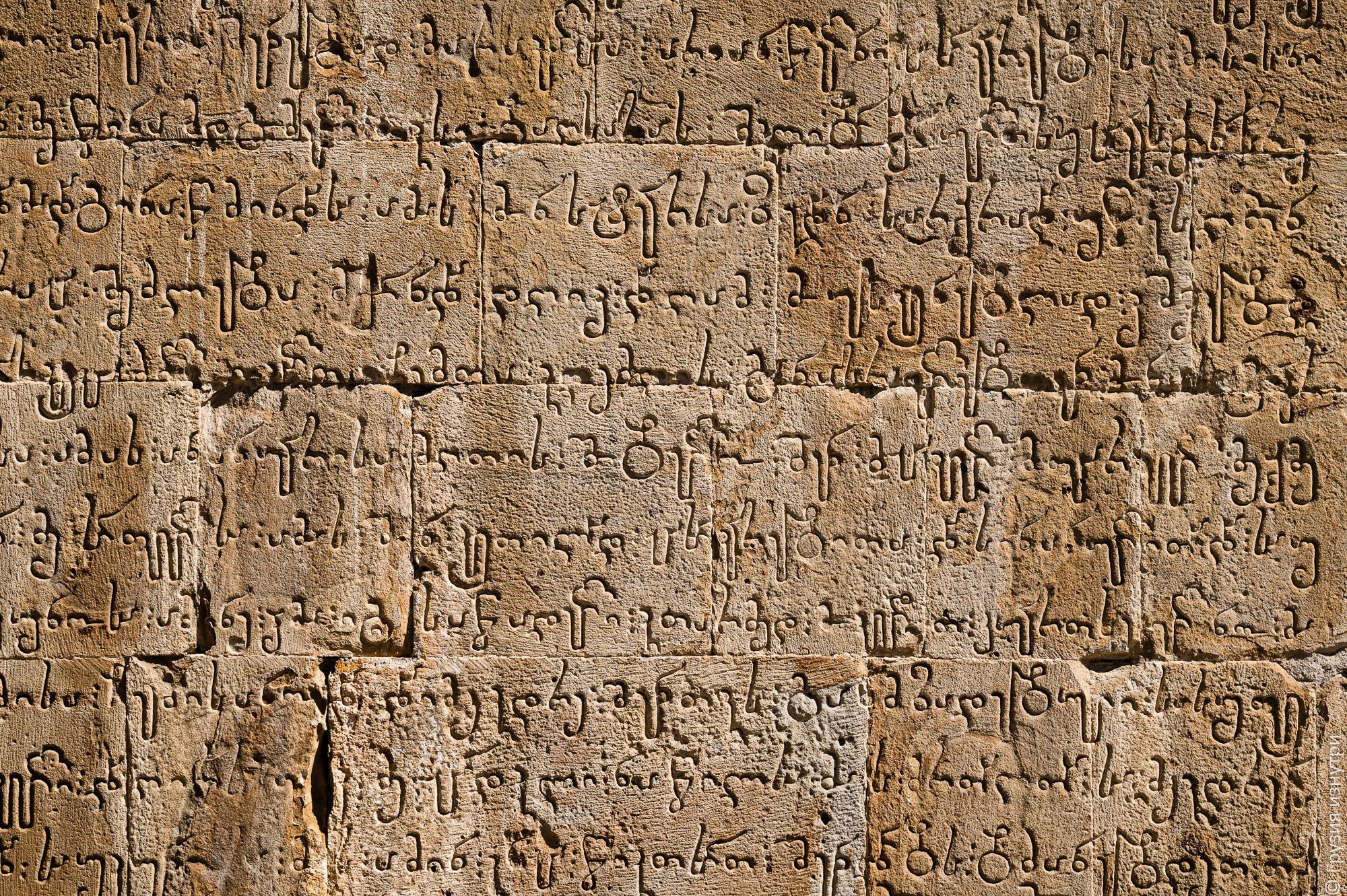
There’s something written on the walls in Georgian. No idea what exactly.
Both Ananuri Fortress and the Zhinvali Reservoir are on the Aragvi River. The river itself begins farther upstream, near the town of Pasanauri, where two other rivers meet: the White Aragvi and the Black Aragvi. The water in one is lighter, the other darker, and the contrast is easy to notice. That’s because they flow through different kinds of soil, which gives the water its different colors.
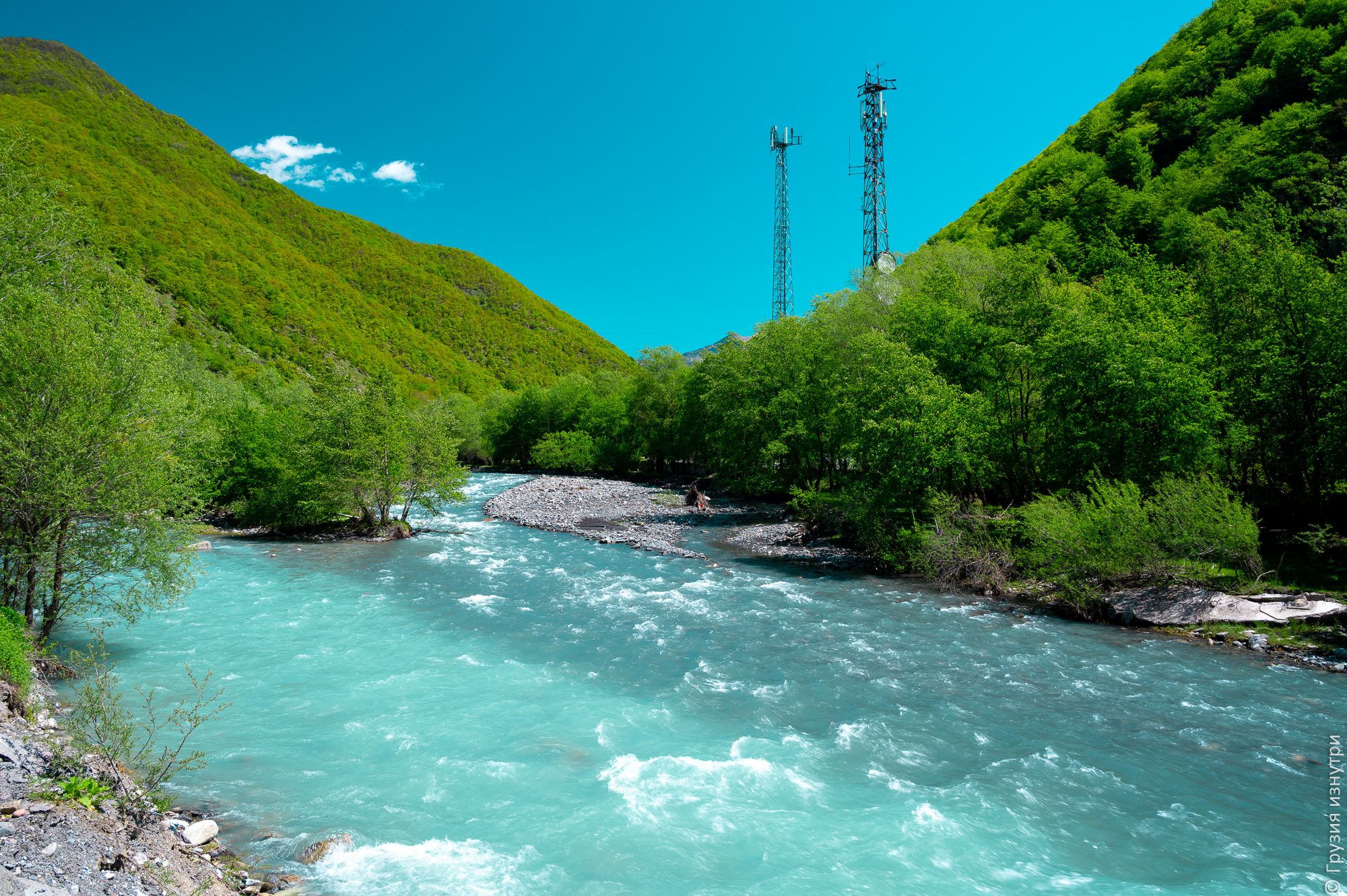
This is what the place looks like in late spring. When I passed through in autumn, the old snow in the mountains had almost fully melted, while the new snow hadn’t fallen yet, so both rivers were noticeably shallower — but their “white” and “black” tones were much more distinct.
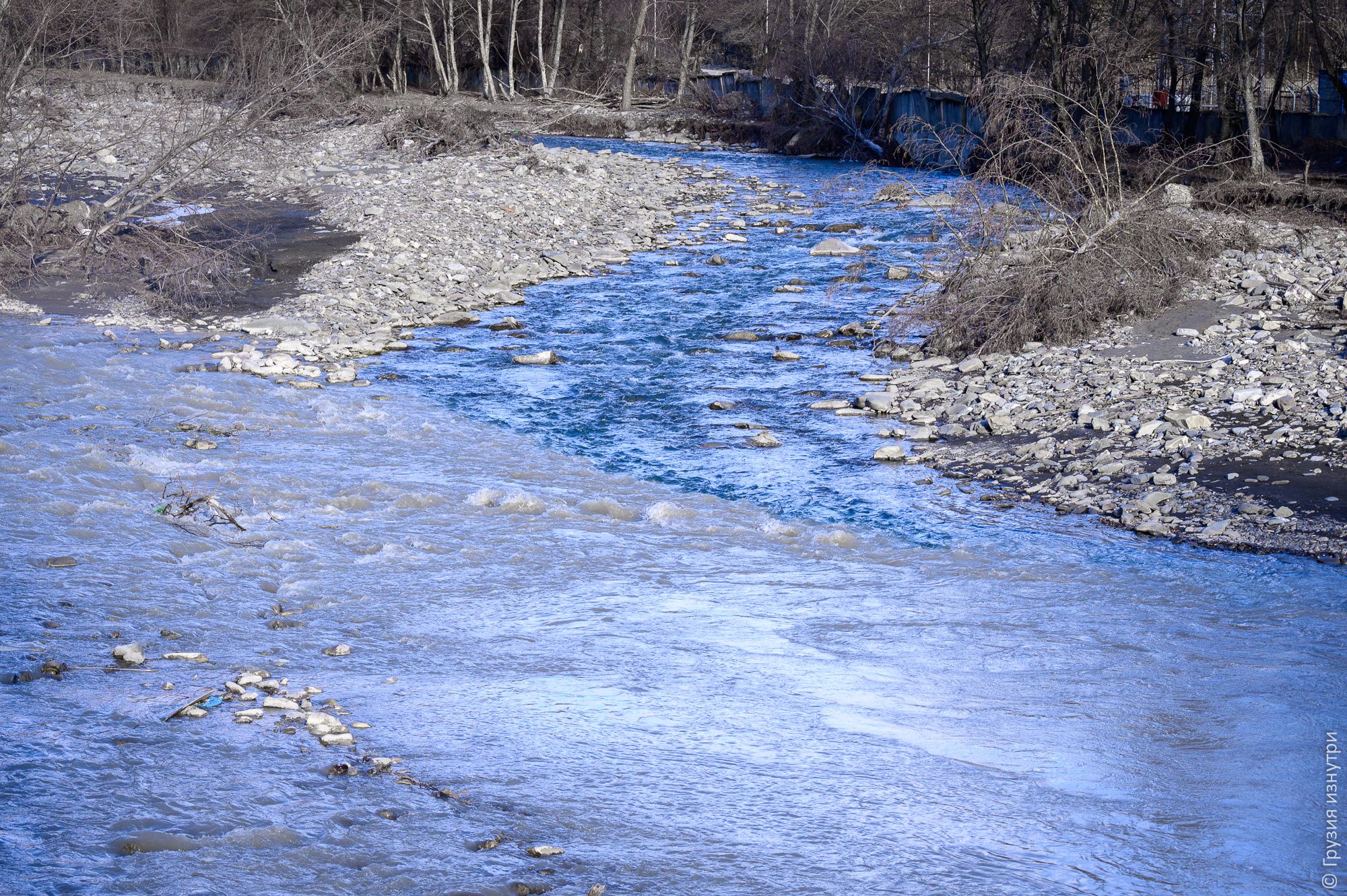
And for some time after the confluence, the two differently colored streams continue flowing side by side without mixing.
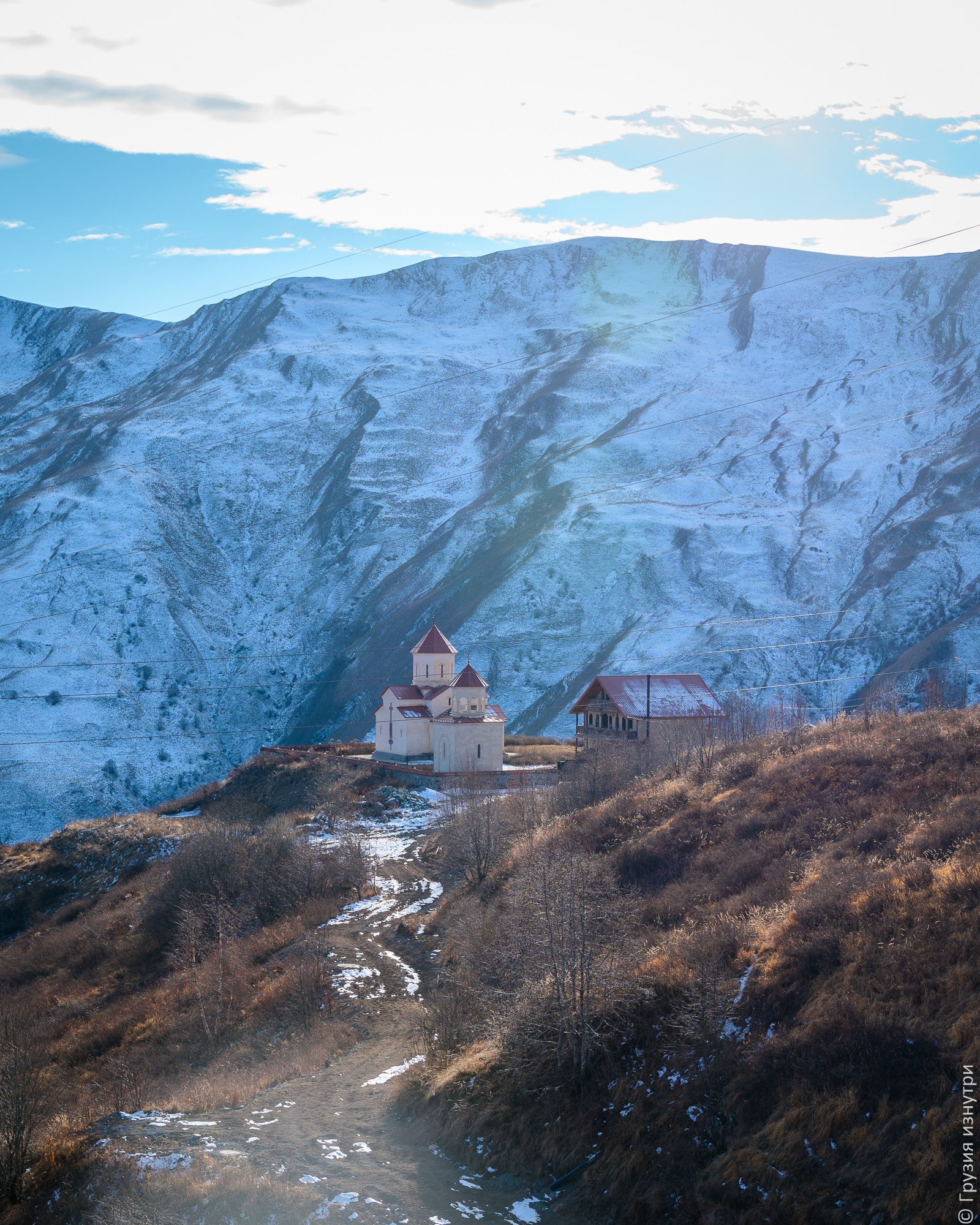
This time our stop in Gudauri was short and purely practical: buy some water, stretch our legs, grab a snack at Smart (a supermarket chain in Georgia). So we didn’t linger, and I only took one photo right from the parking lot in front of the store.
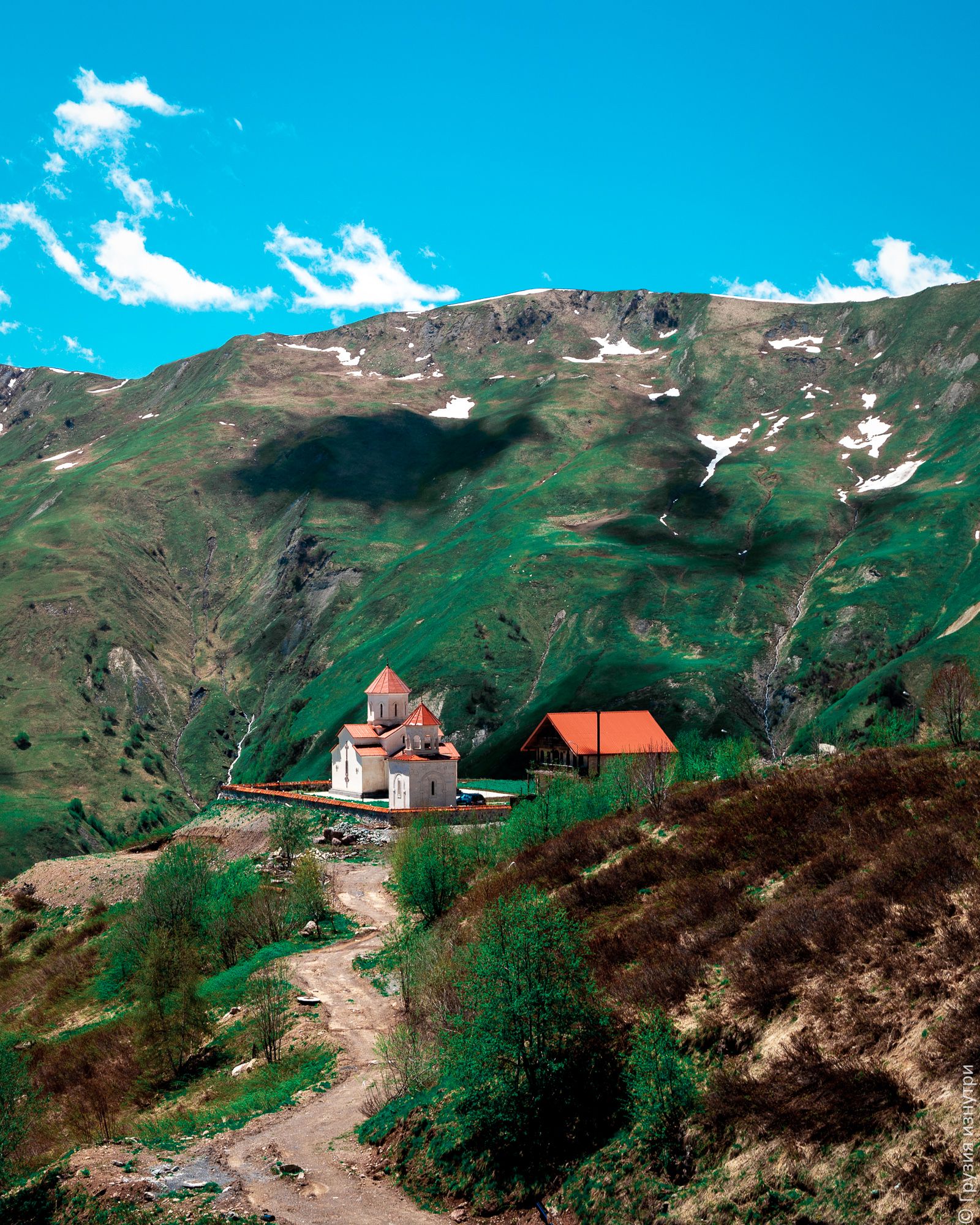
And this is what the same place looks like in autumn.
After crossing the Jvari Pass, which lies between the villages of Gudauri and Kobi, we soon arrived in the town of Stepantsminda, which used to be called Kazbegi for most of the 20th century and the beginning of the 21st. Plenty of people still call it that. It’s from Stepantsminda that you get the iconic view of Mount Kazbek and the Gergeti Trinity Church.
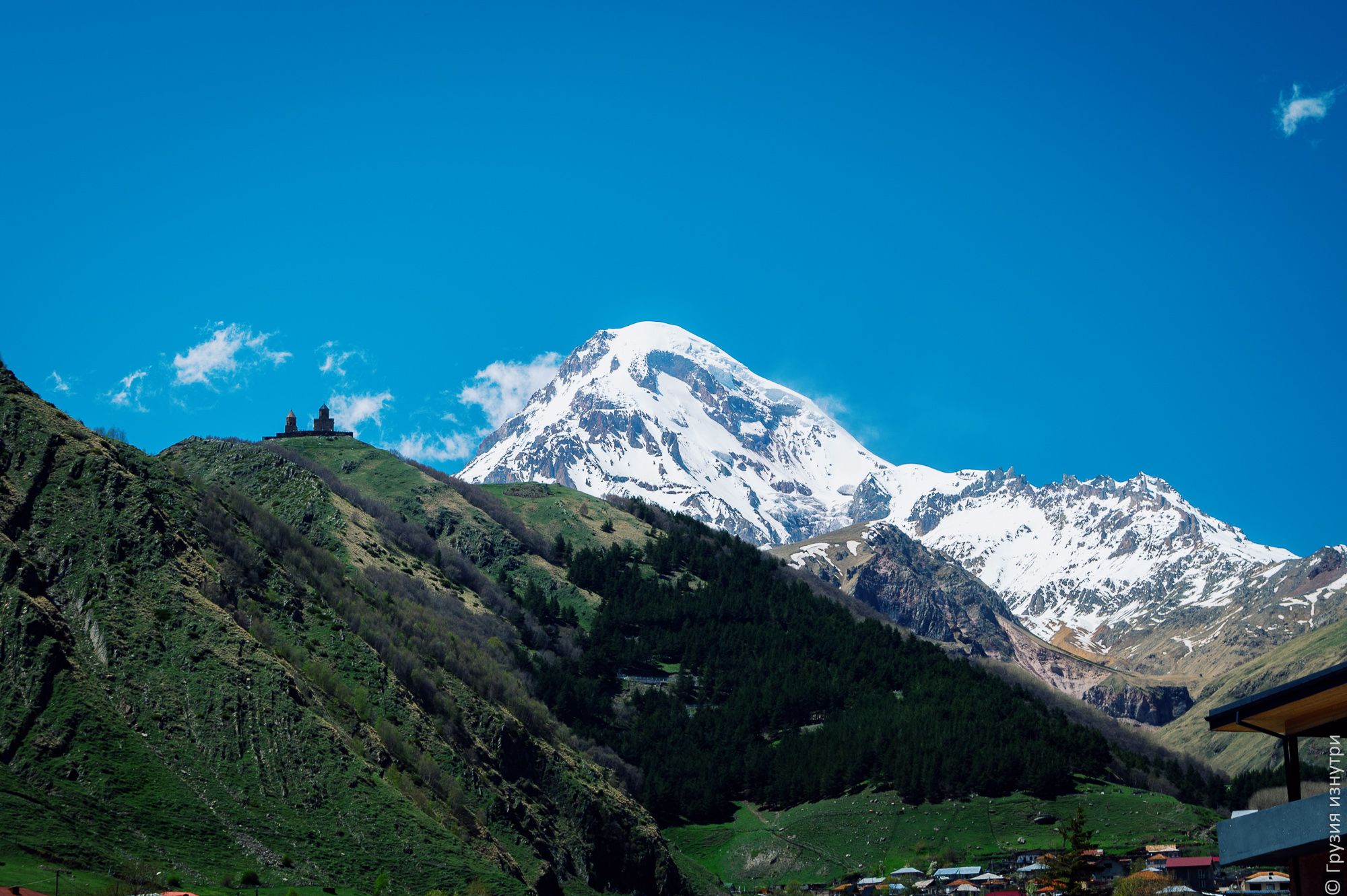
In Georgian, Kazbek is called Mkinvartsveri, which means “mountain with an icy peak,” because of the glacier that sits there year-round.
There’s a local legend that if Kazbek’s summit is hidden by clouds, then the mountain is not greeting you. Sometimes the sky can be completely clear, except for one small round cloud wrapped right around the summit, hiding it completely. I got lucky: I’ve been to Stepantsminda twice, and both times Kazbek was kind enough to reveal its peak in all its glory.
The first time I saw Kazbek from Stepantsminda, I thought nothing could possibly outdo that view. Very soon, I realized just how wrong I was.
Above Stepantsminda, high on the mountain at over 2,000 meters above sea level, not far from the village of Gergeti, stands the Gergeti Trinity Church. It’s worth going up not only to visit the church itself, which dates back to the 14th century, but also because the road up — and the church grounds themselves — offer even more spectacular views of Kazbek.
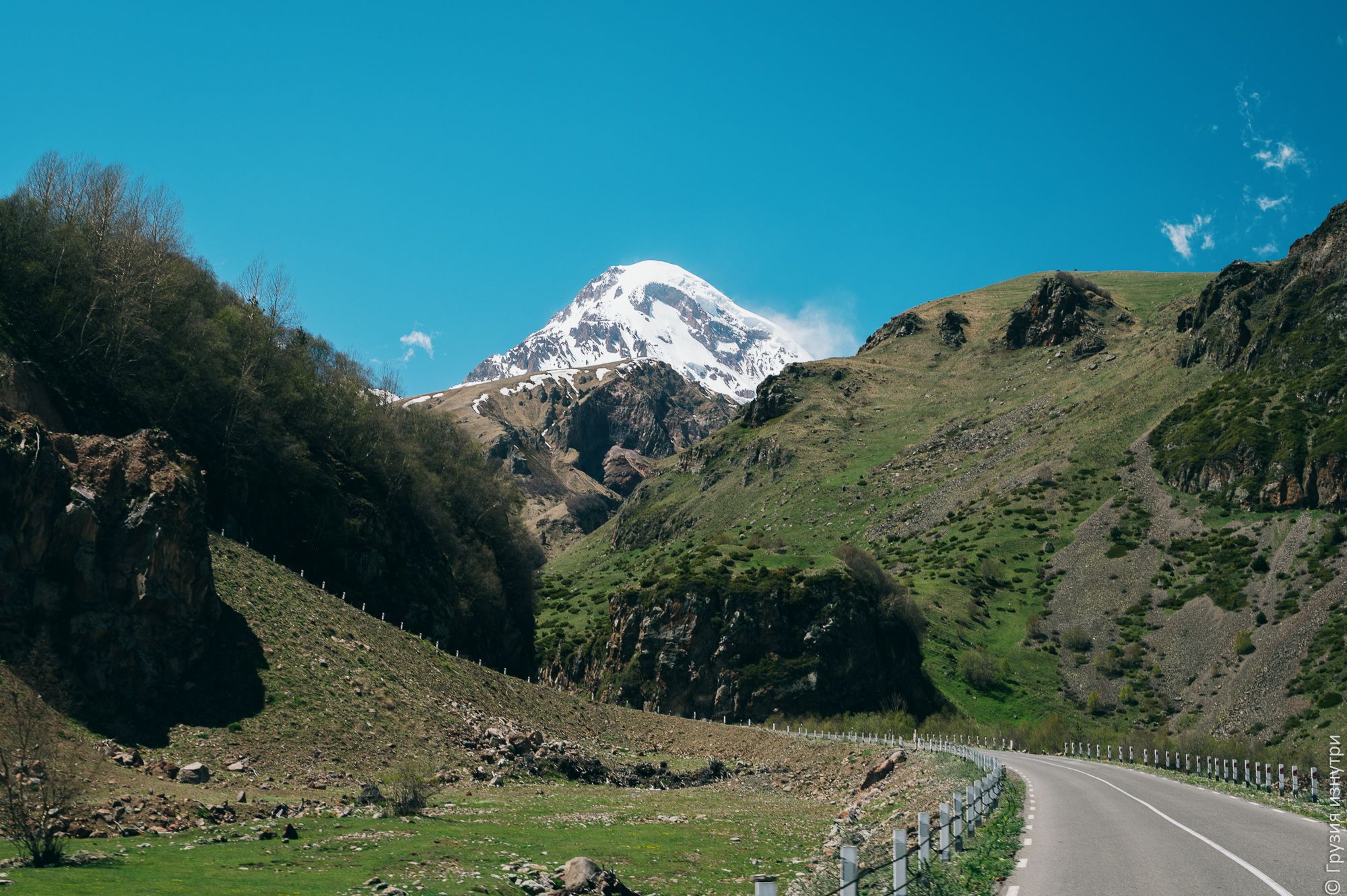
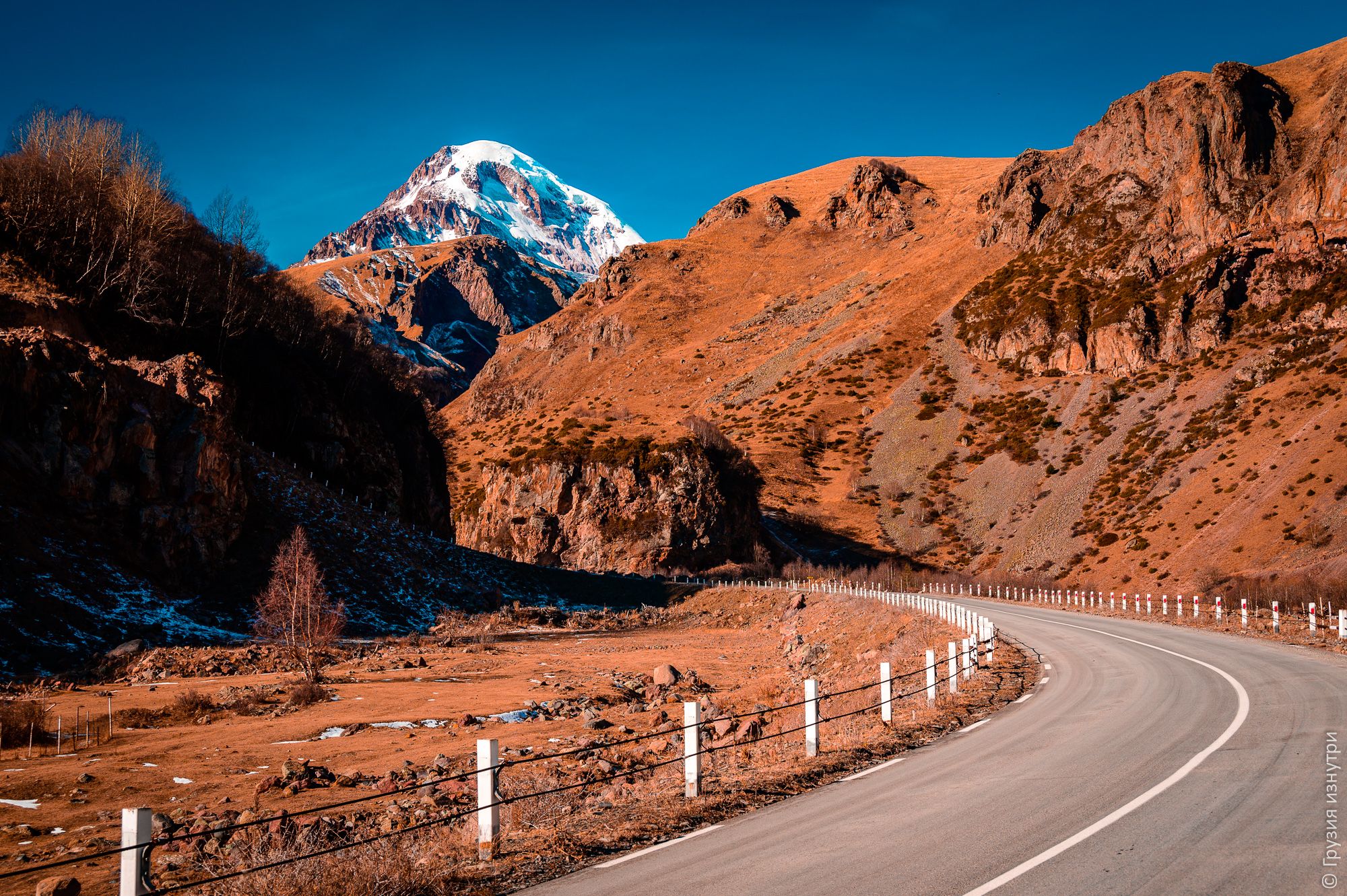
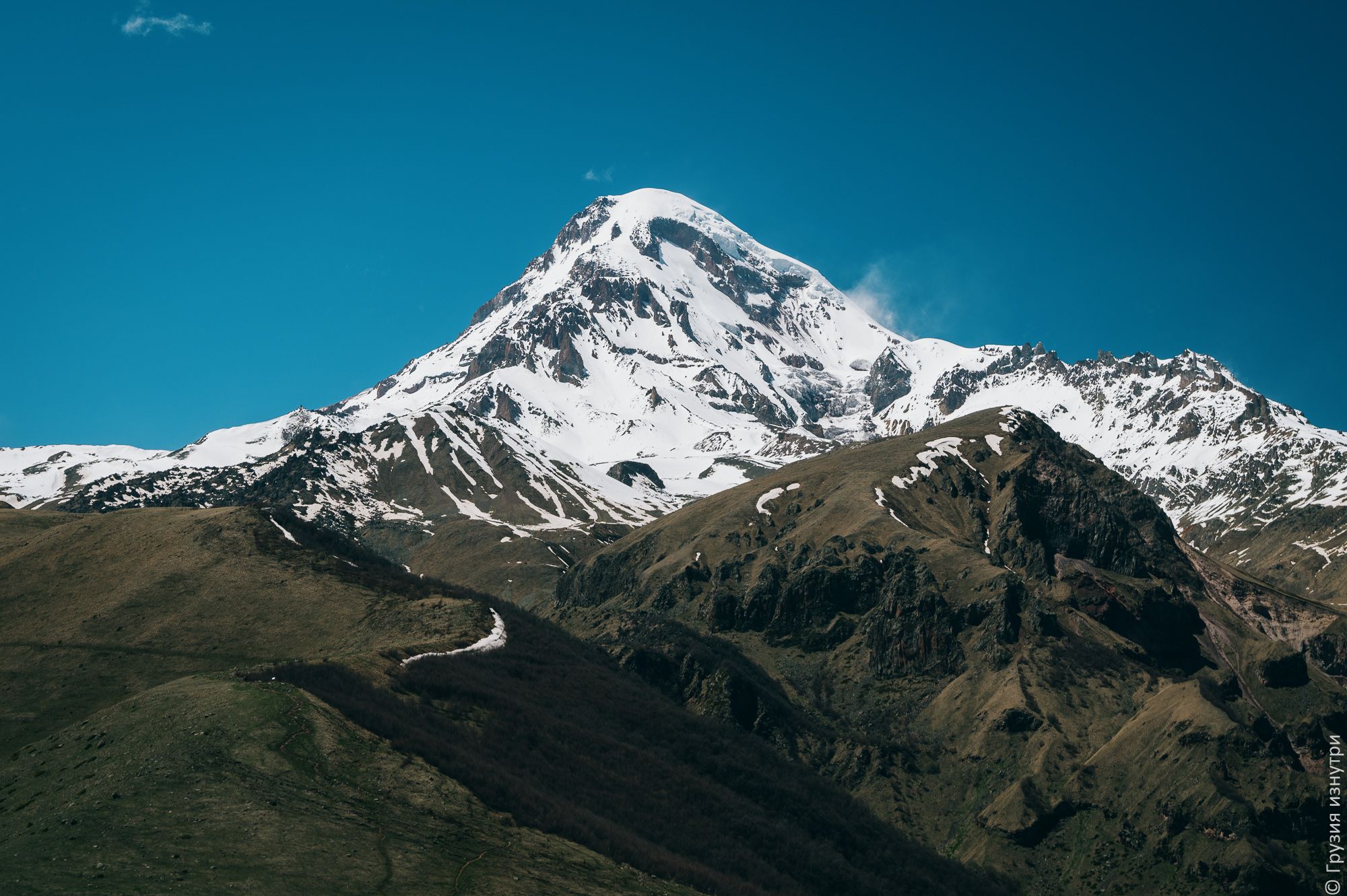
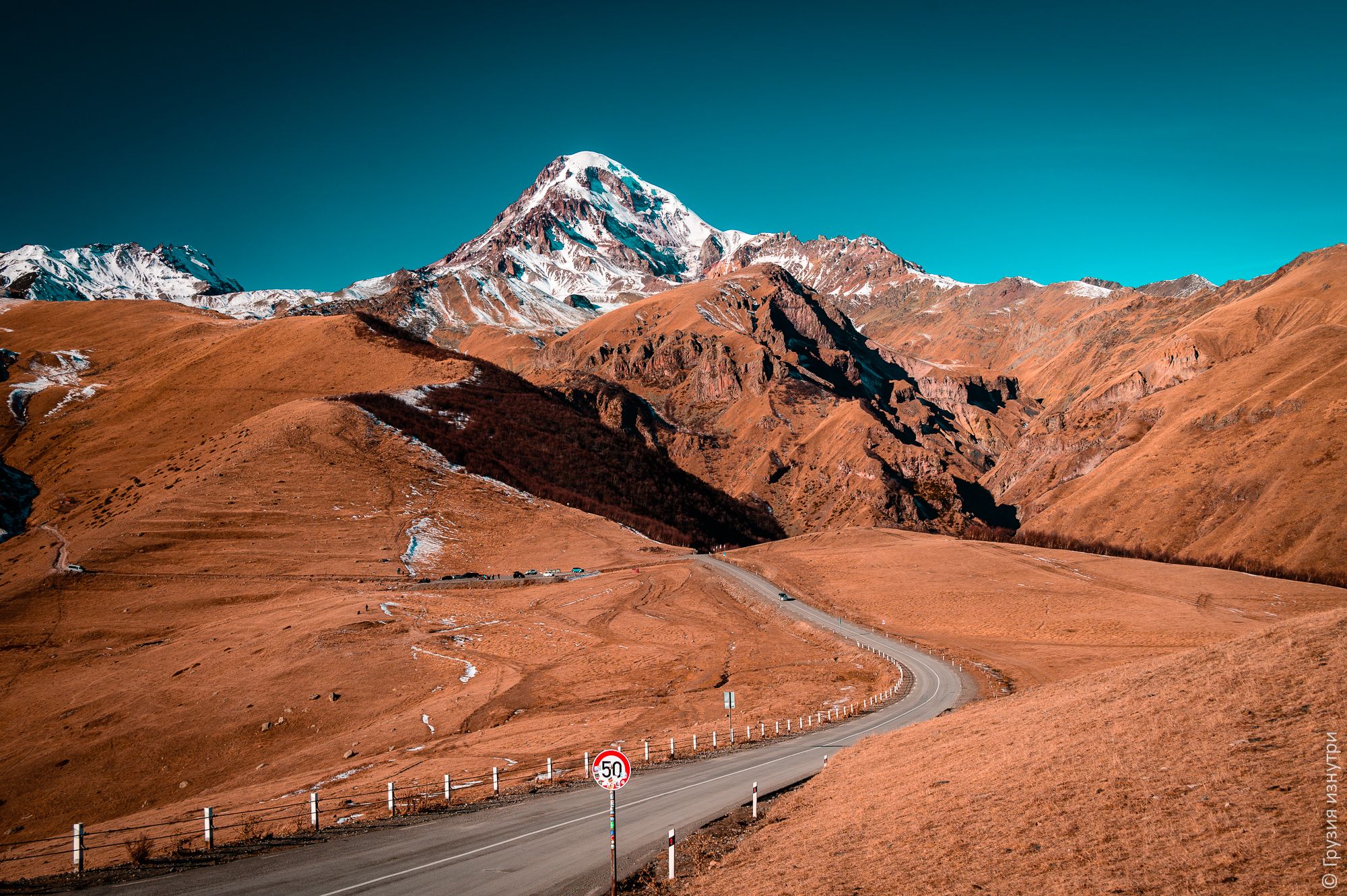
You can see more photos of autumn Kazbek in a separate post. And yes, technically those shots were taken in January, but that year January was bizarrely snowless, and the scenery looked much more like autumn, so that’s what I’m going to keep calling it.
The walls of the Trinity Church are covered with inscriptions and glyphs of varying degrees of antiquity.
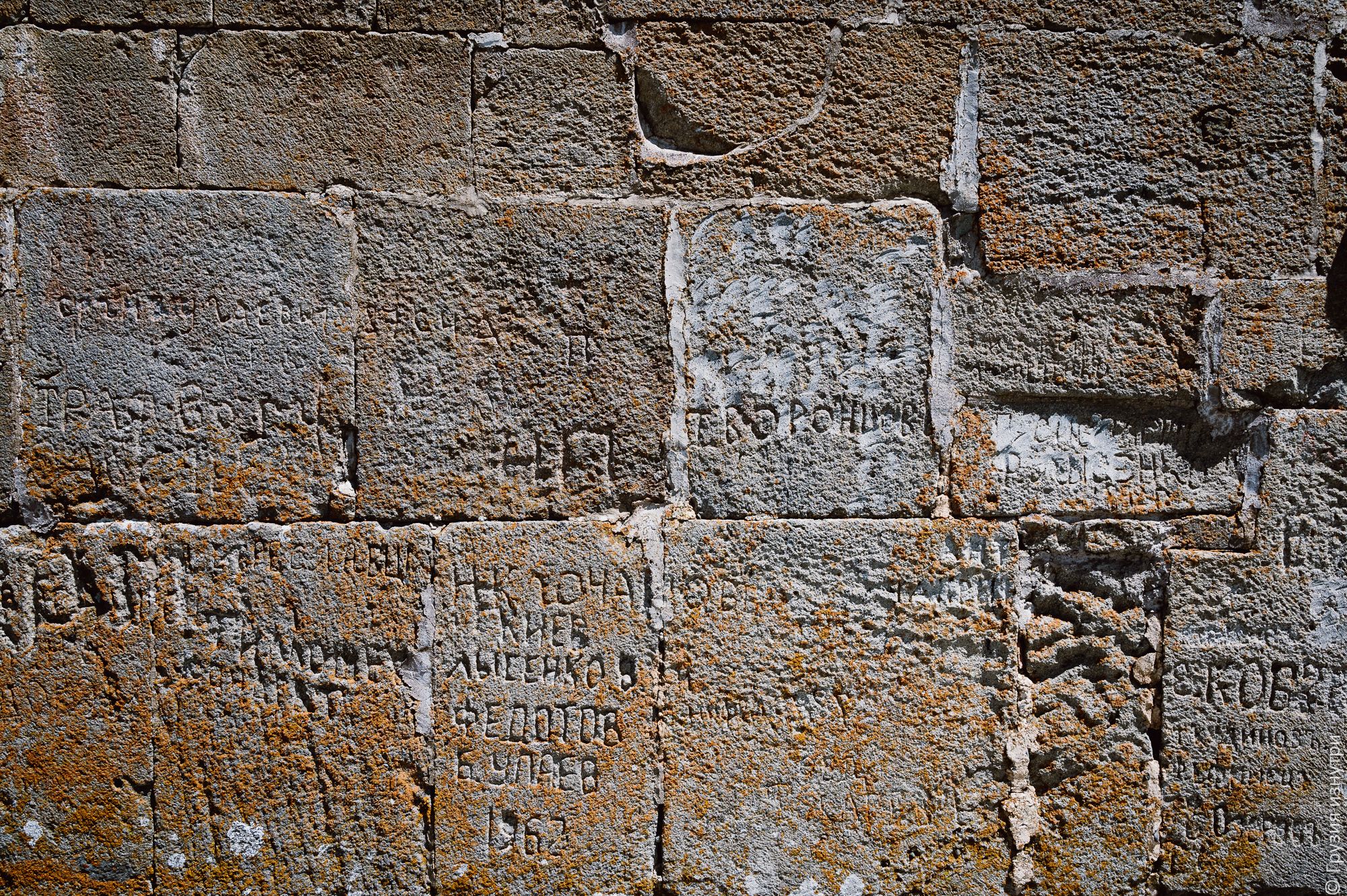
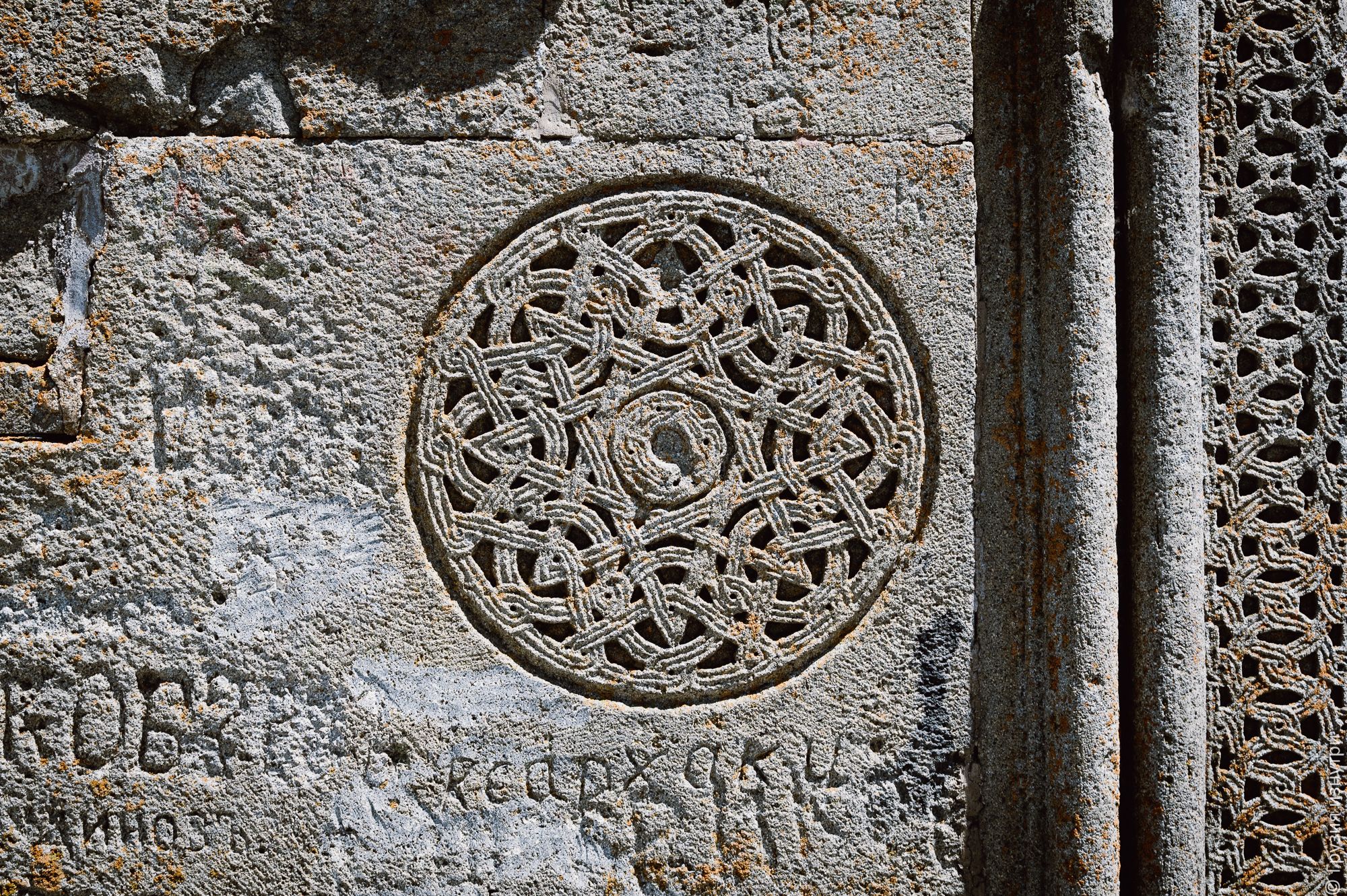
And if you turn away from Kazbek, you get a view over Stepantsminda and Gergeti lying below at the foot of the mountains.
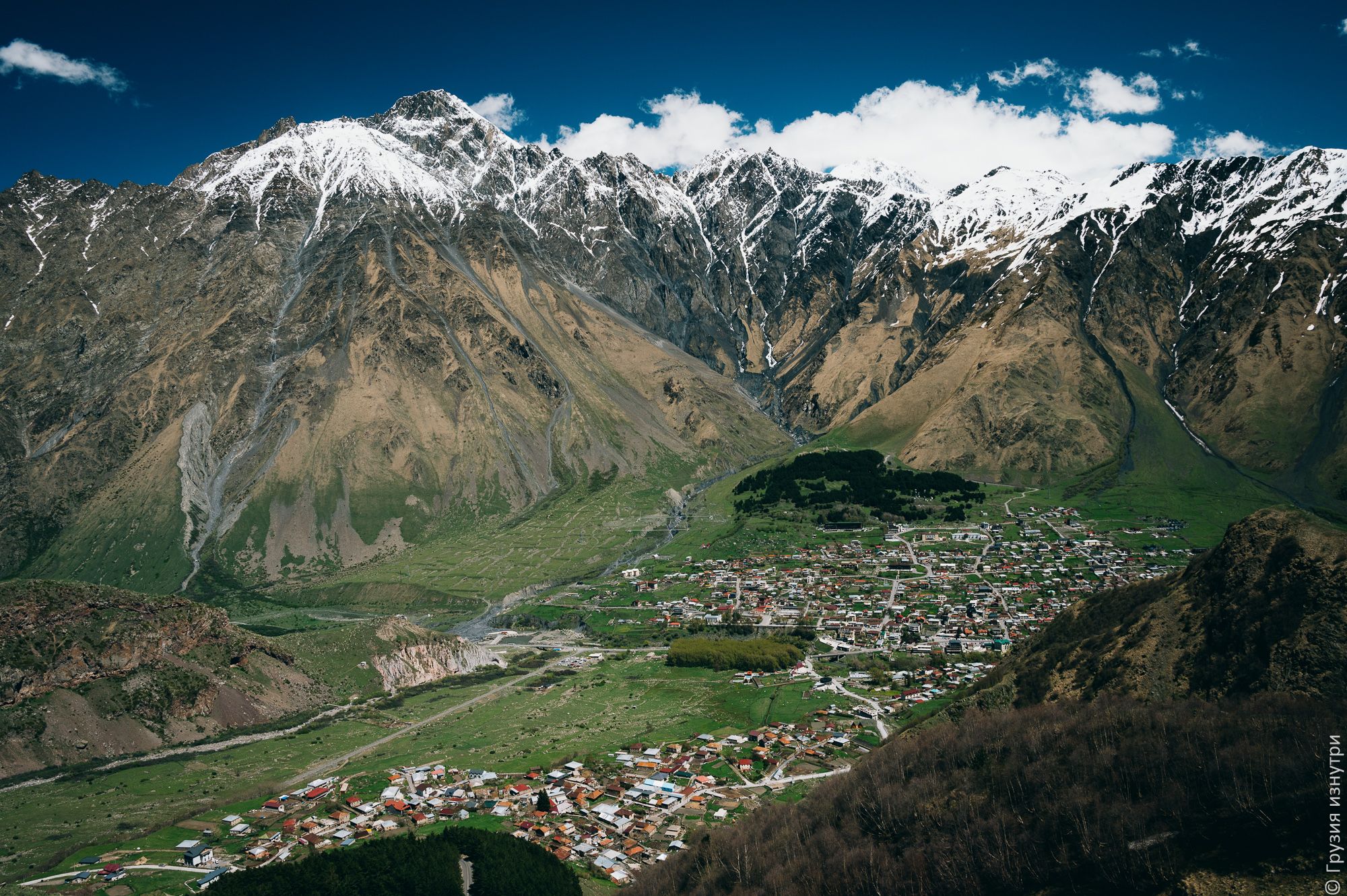
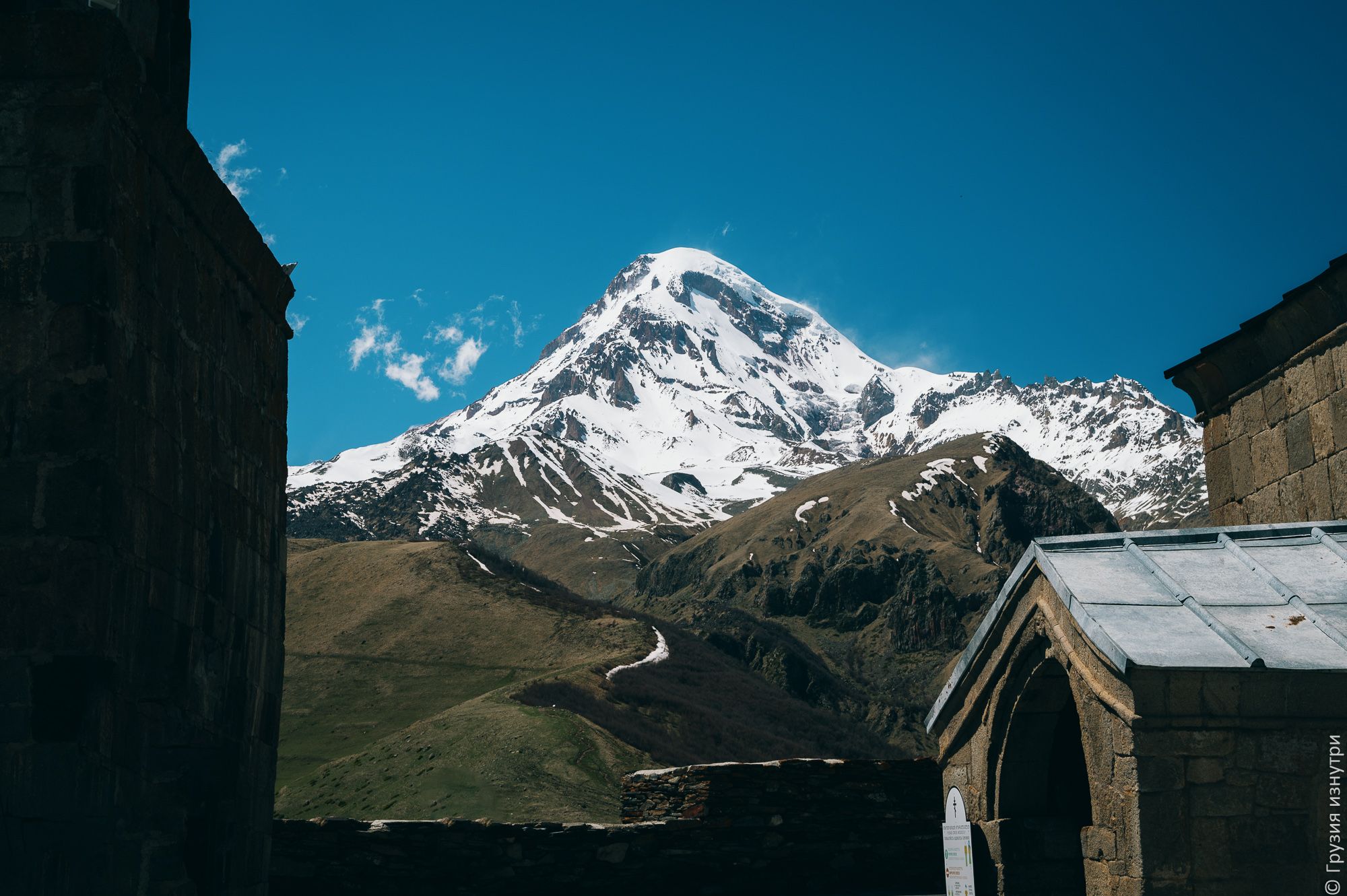
Even though we had our own car, for some reason our guide chose to use local drivers and their vehicles to take us up to the church. They drove us there, gave us time to walk around, and then took us back down to the center of Stepantsminda.
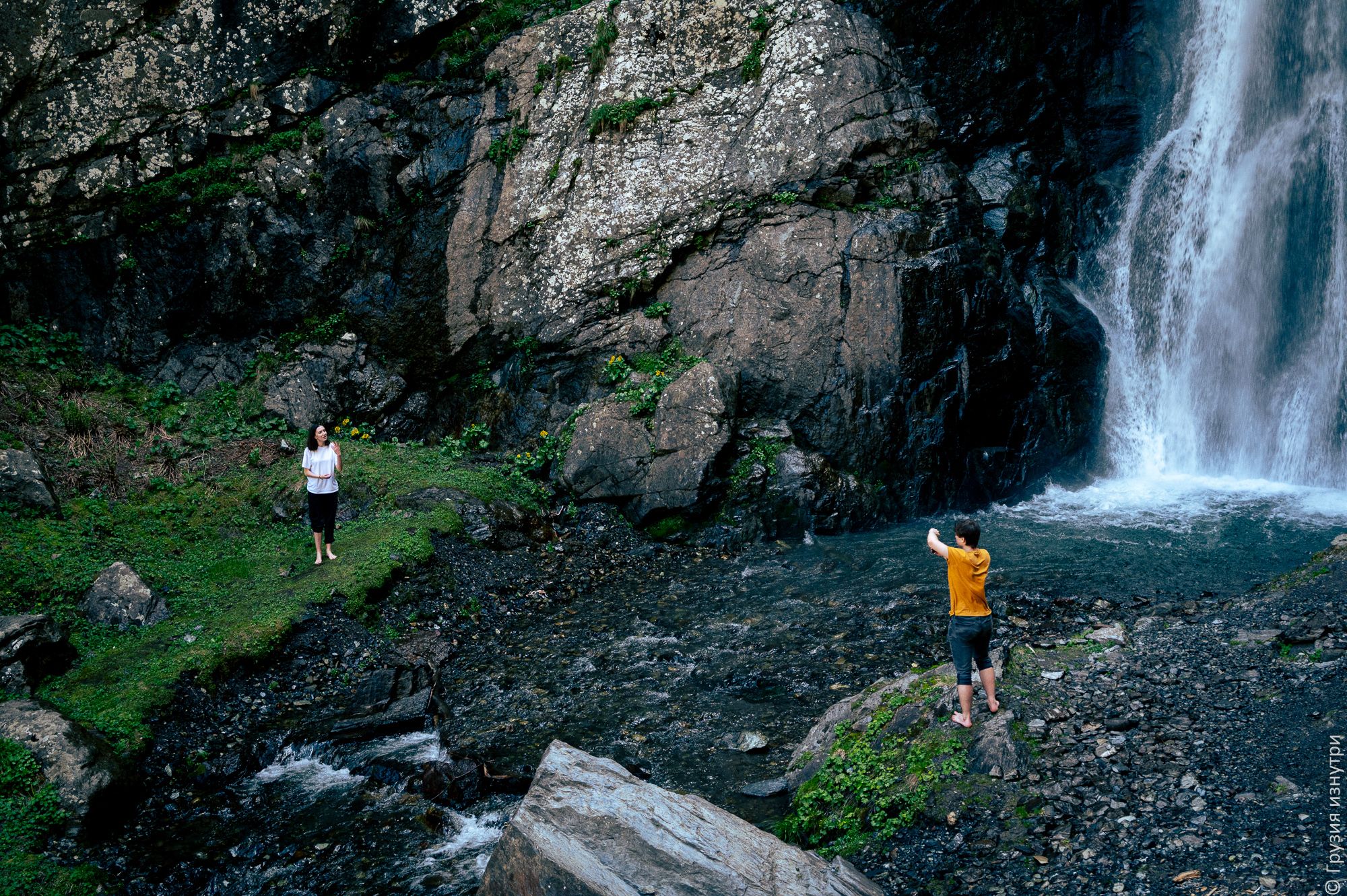
Right after the Trinity Church, we headed to the Gveleti Waterfall. It lies a bit farther along the Georgian Military Road, past Stepantsminda toward the border. But you can’t drive all the way to the waterfall itself. We had to turn off the highway, park on a dirt road nearby, and continue on foot. The walk wasn’t long — about a kilometer and a half. We took it easy and got there in roughly half an hour. The trail followed a small river with picturesque rapids here and there (or maybe tiny waterfalls?).
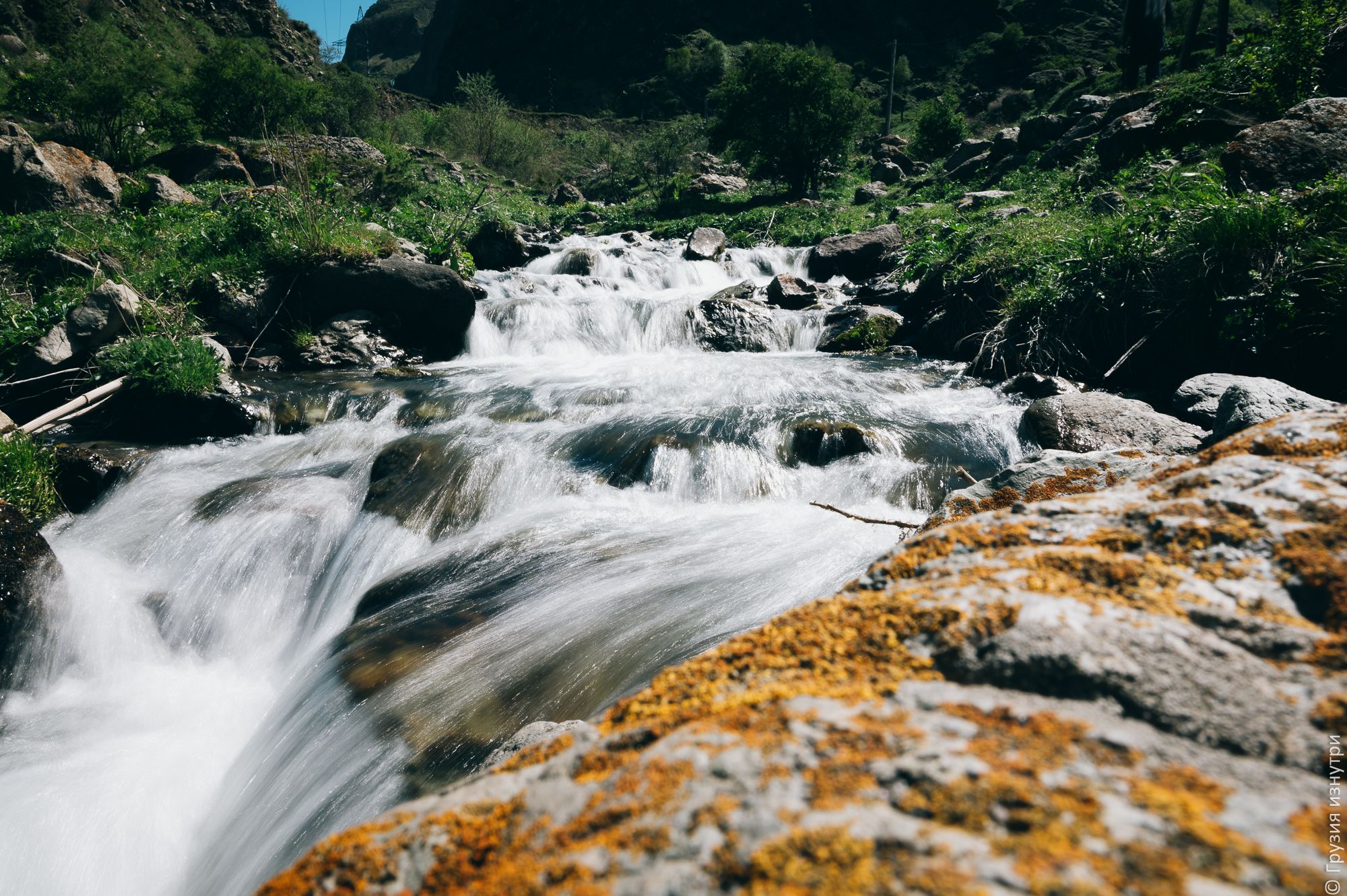
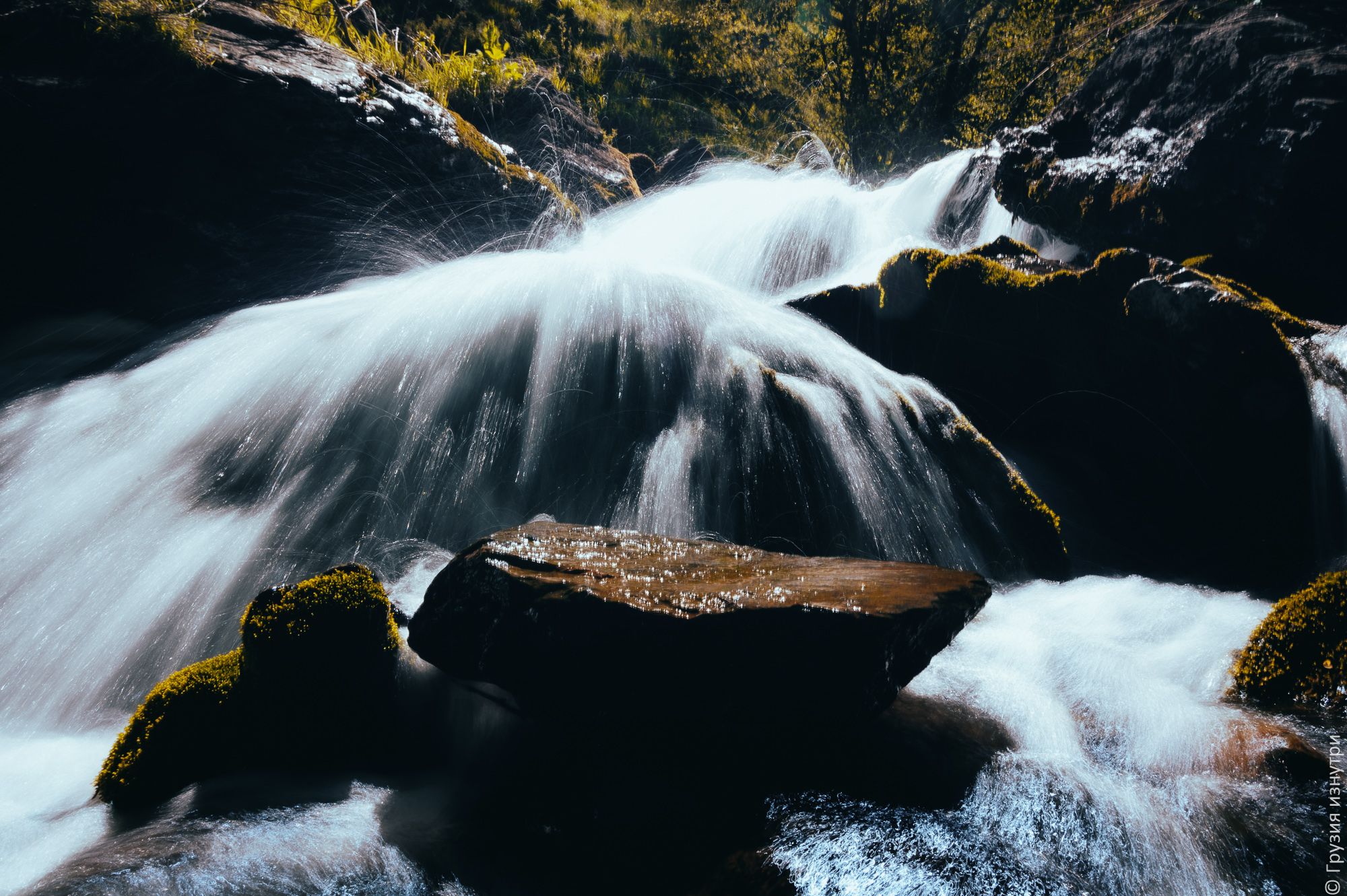
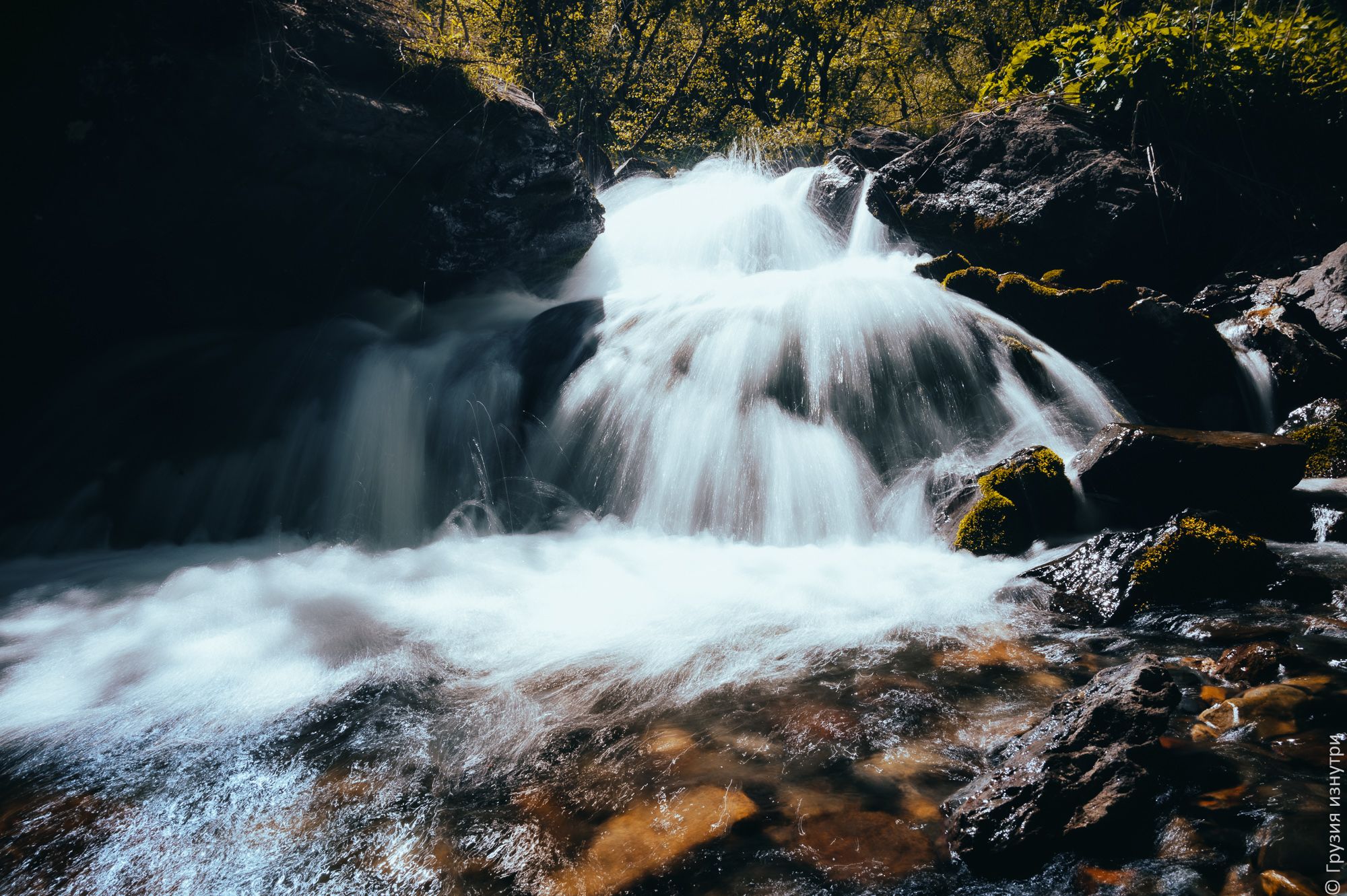
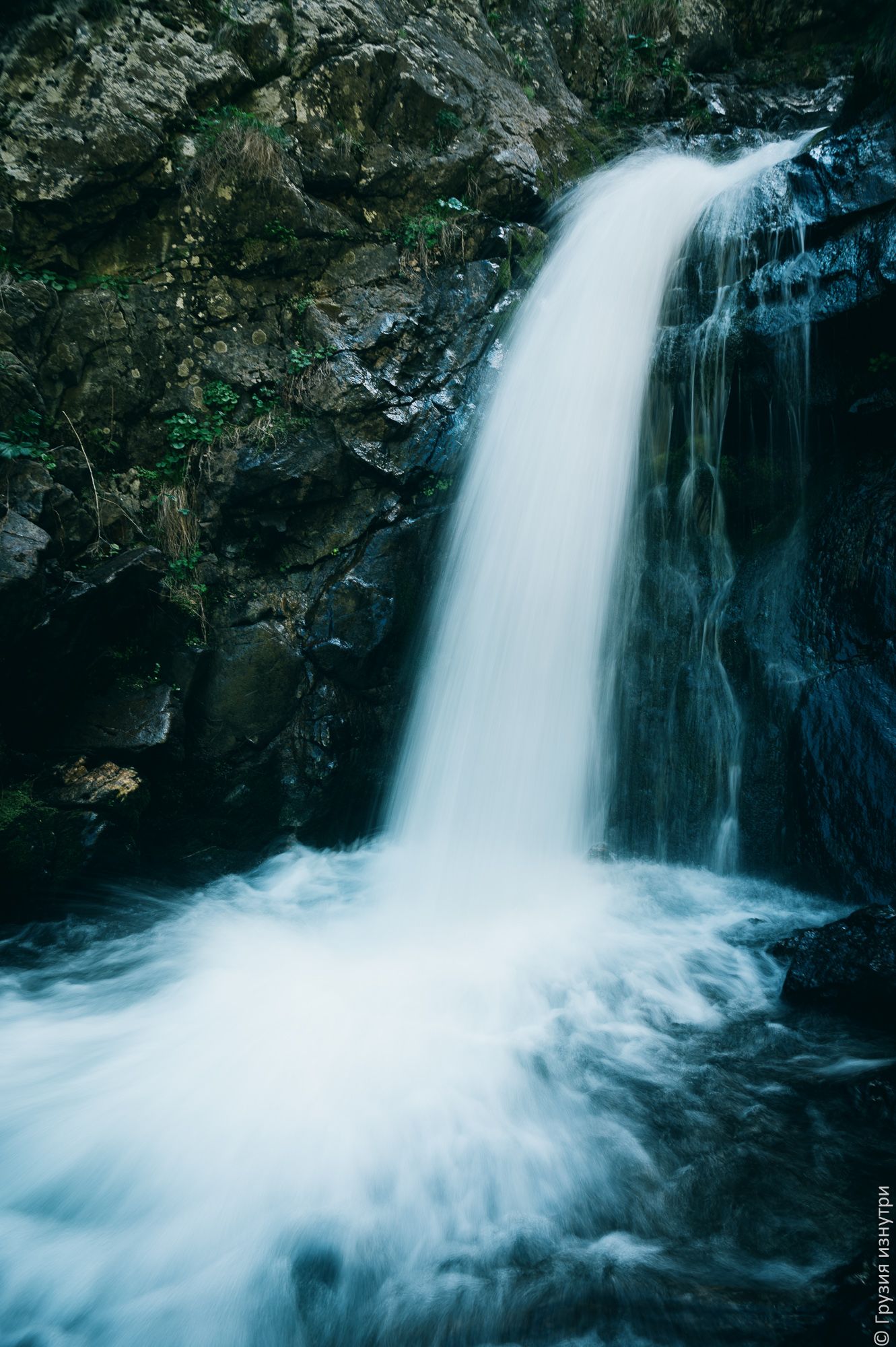
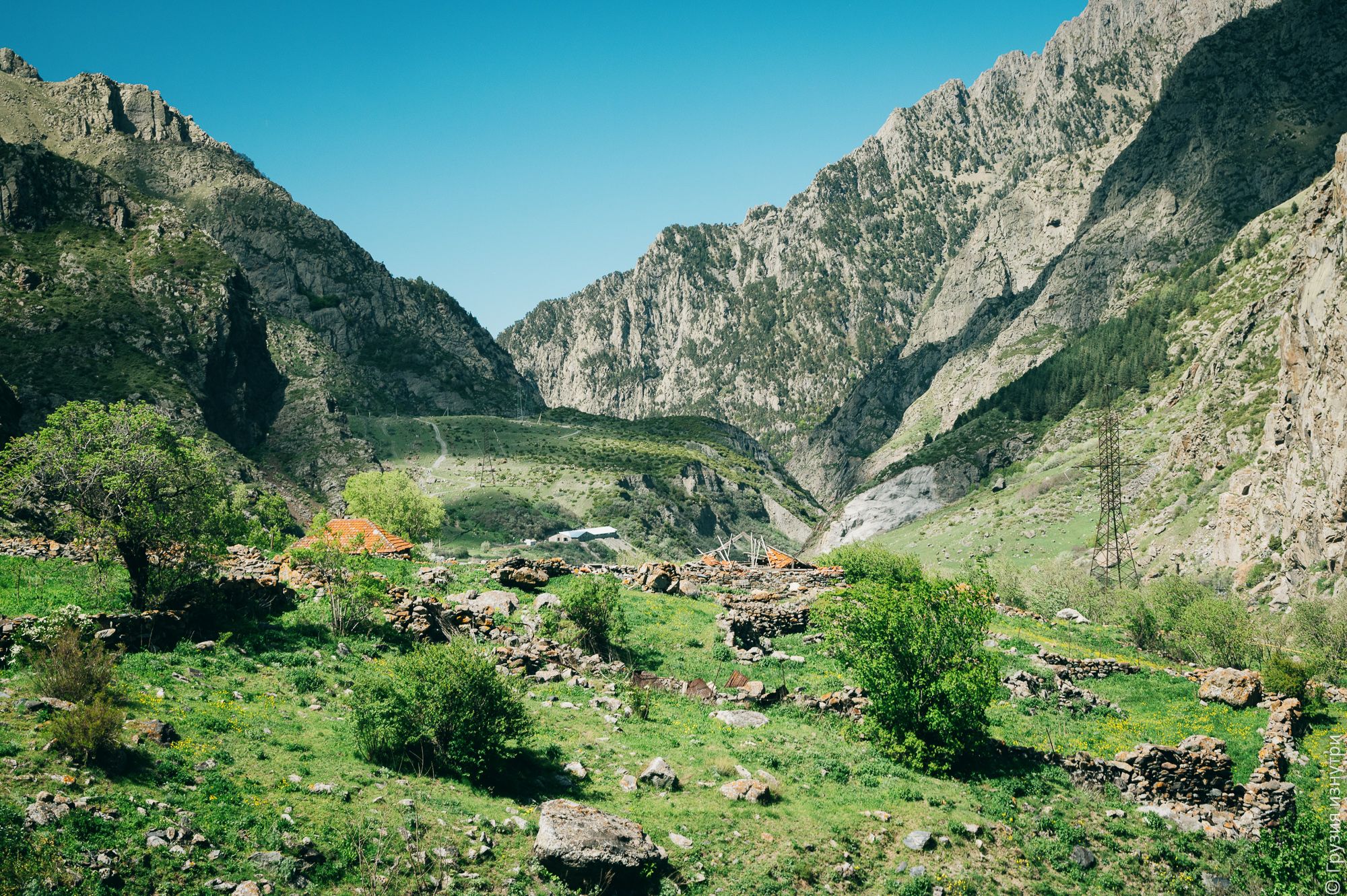
Almost the entire way to the waterfall was along a comfortable, well-trodden path with a gentle uphill climb, and only near the end did we have to hop over a few rocks. There were signs along the route, and we definitely weren’t the only ones there, so getting lost wasn’t really a concern. And of course the whole walk came with gorgeous views of the mountains and valleys around us.
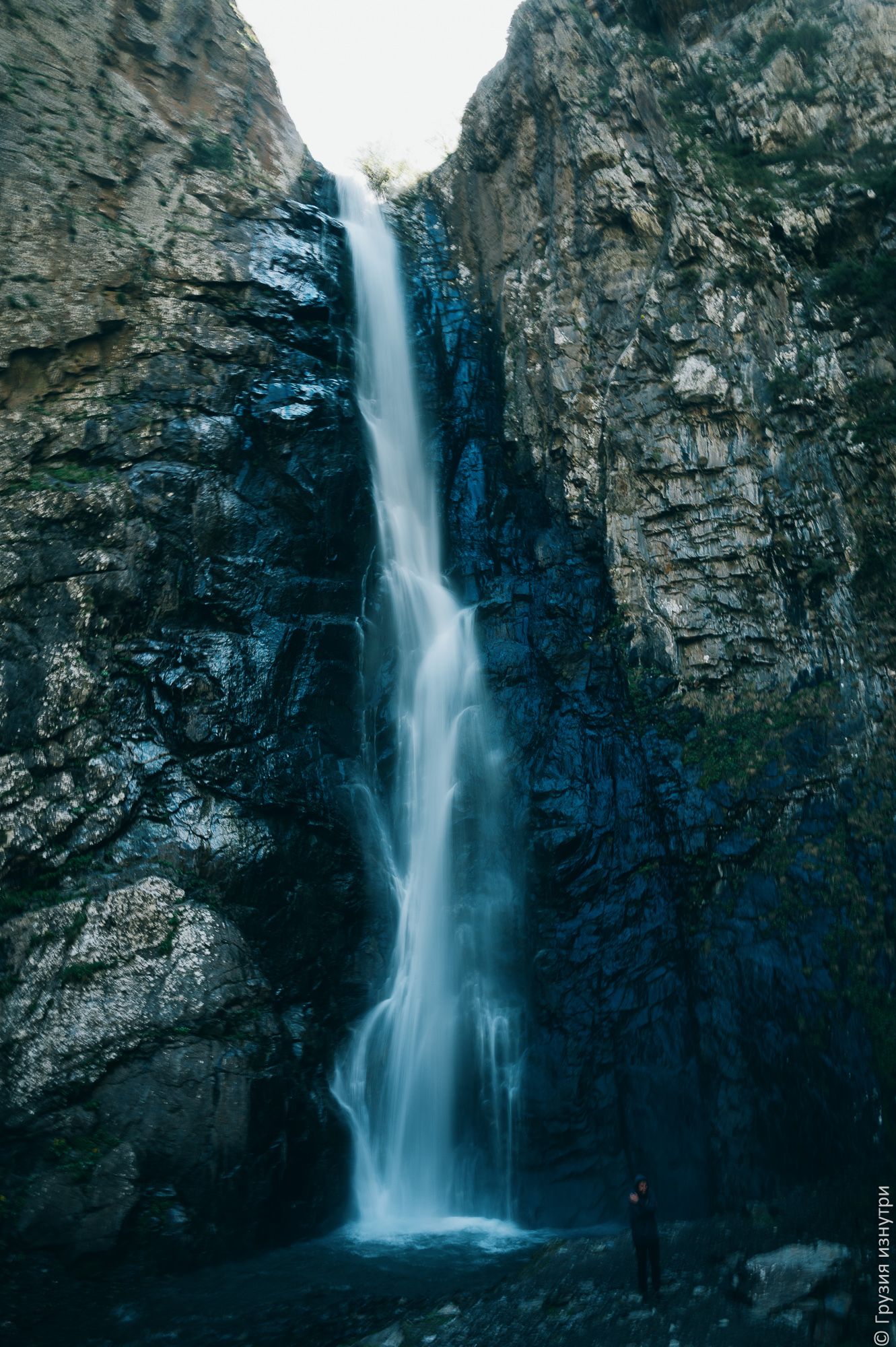
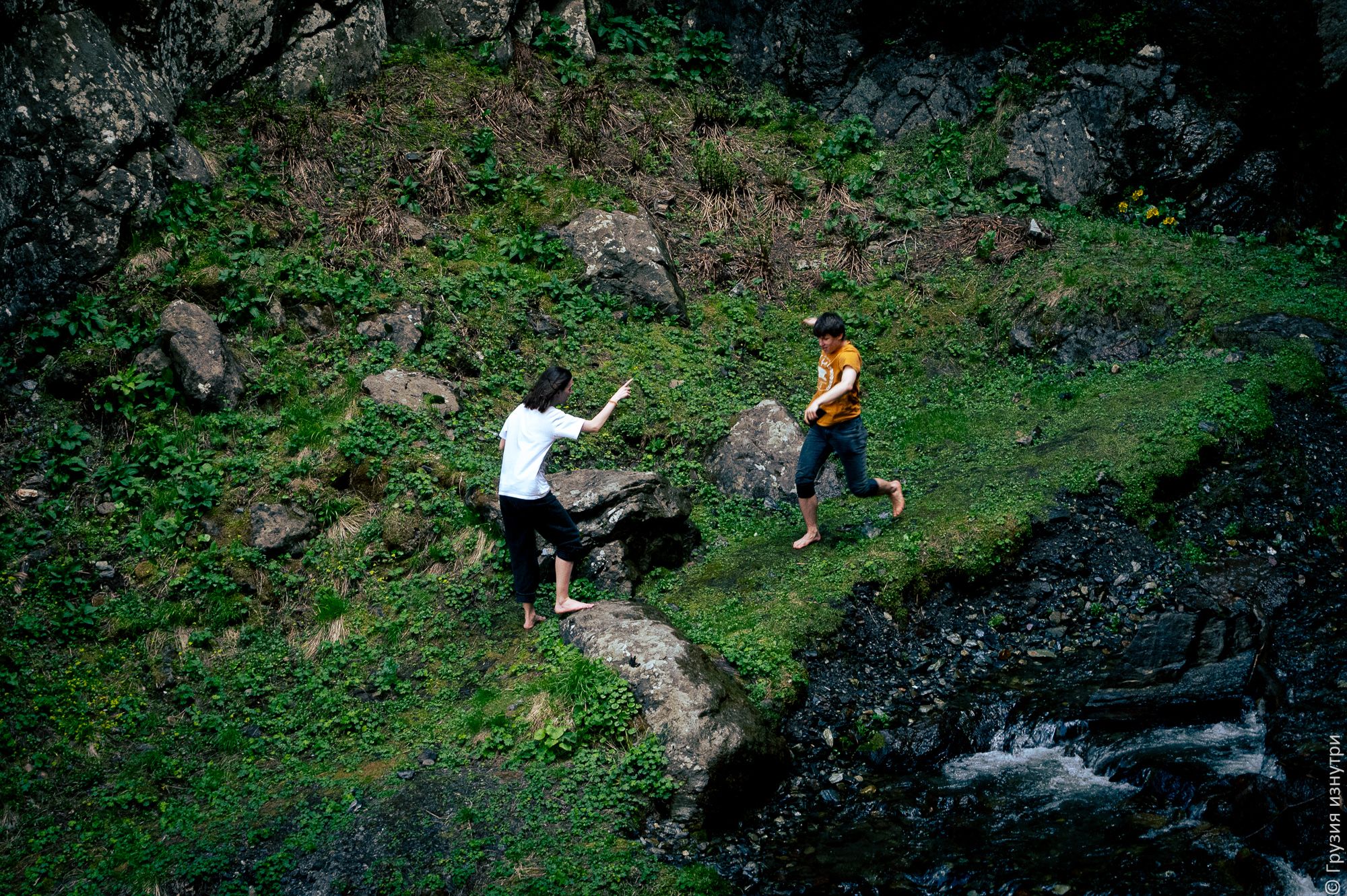
The Great Gveleti Waterfall is, objectively, tall, loud, and very splashy, but unfortunately it didn’t impress me all that much. It sits in the shade, at the end of a narrow gorge, and at that time of day the sun barely reached it, so the photos came out kind of dull. Which, to be fair, did nothing to stop us from resting there and splashing around in the water.
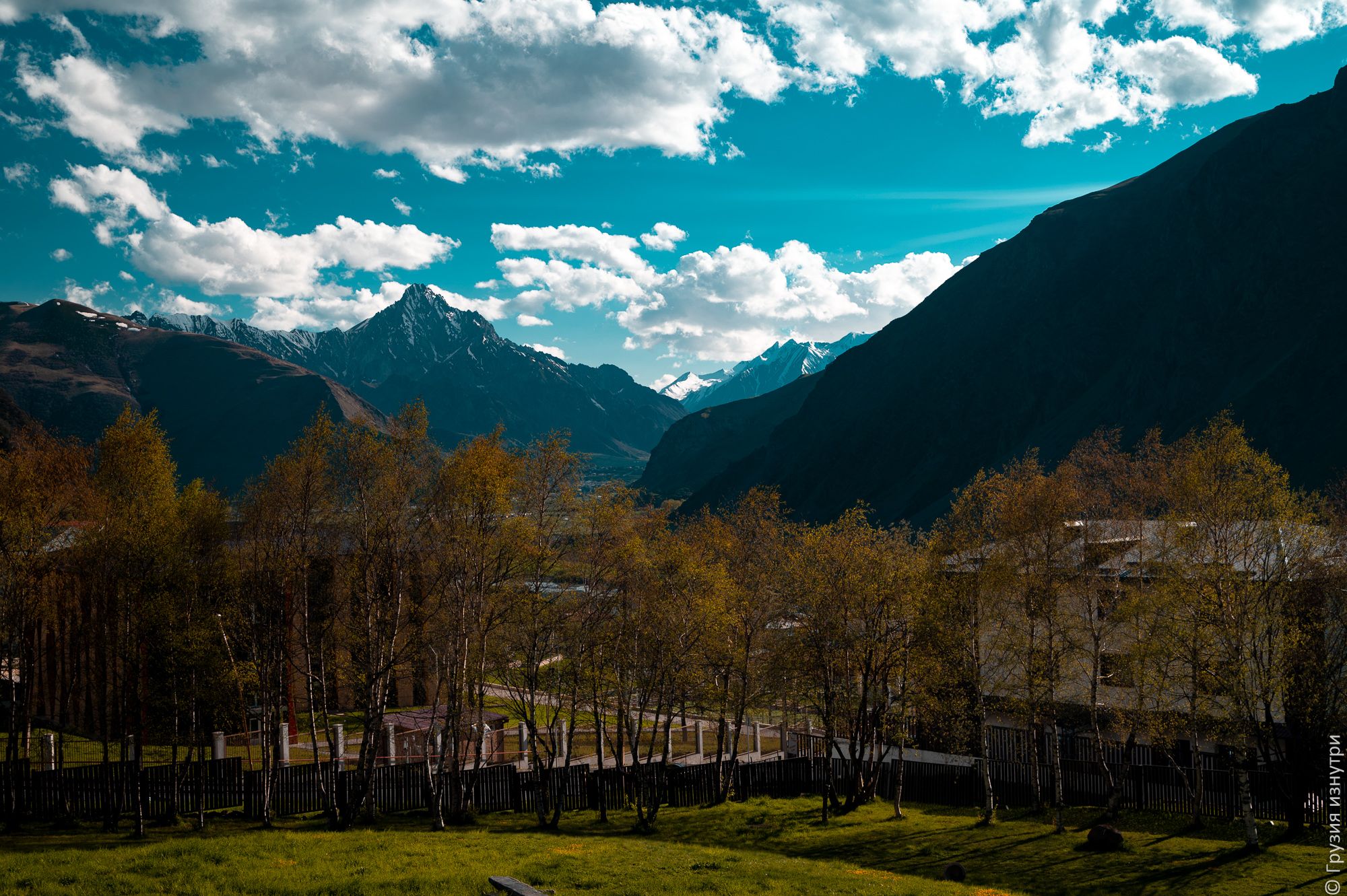
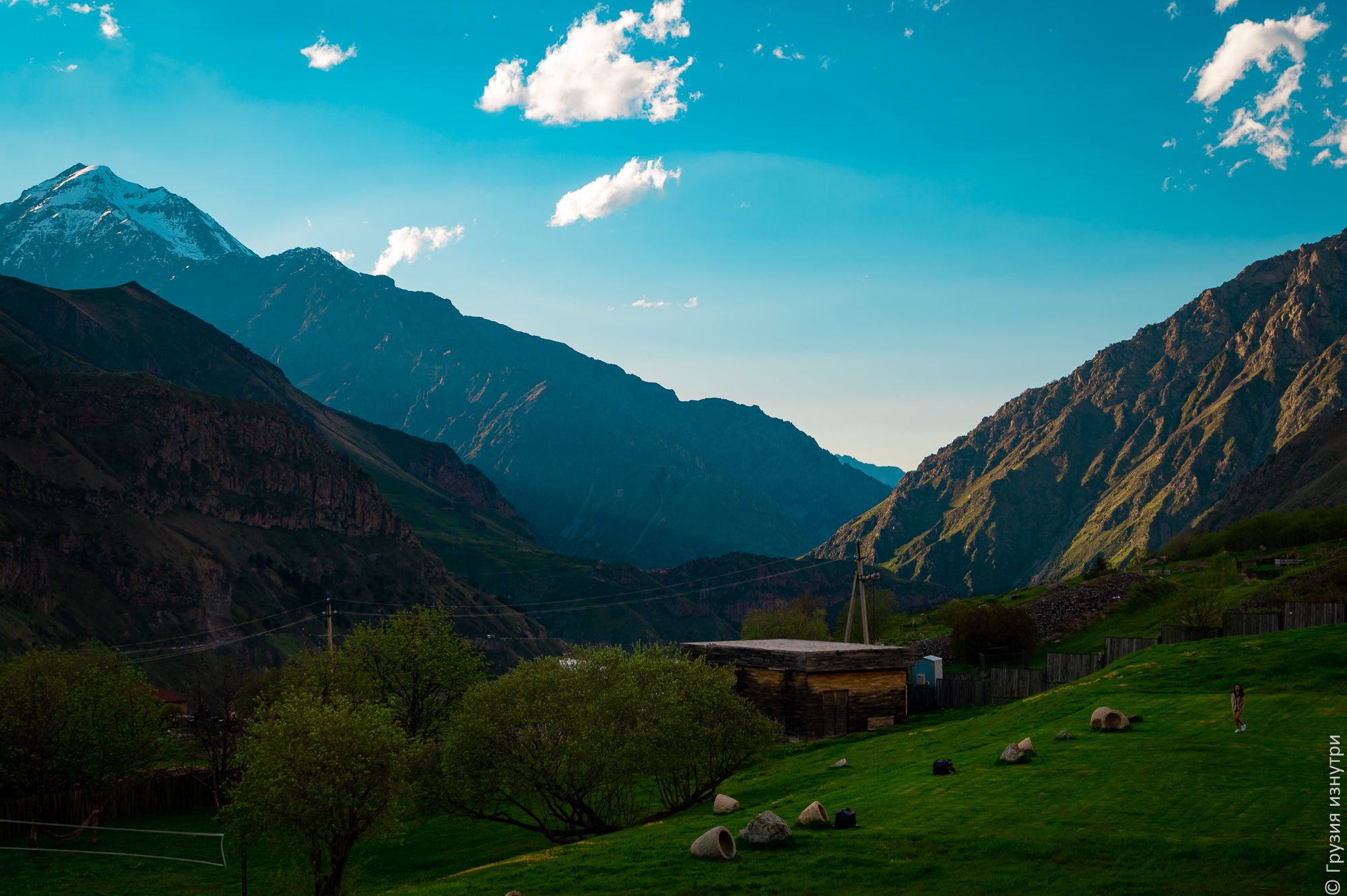
By that point everyone was pretty hungry, so we drove back to Stepantsminda — it was on the way anyway — and had dinner at the restaurant in the Rooms Hotel. The restaurant turned out to be very good. I was especially advised to try elarji with kharcho, a Megrelian cornmeal-and-cheese dish, so naturally I ordered a Caesar salad instead. Along with the excellent dinner, the restaurant treated us to yet another batch of unreal mountain views. You could film a Hobbit movie there.
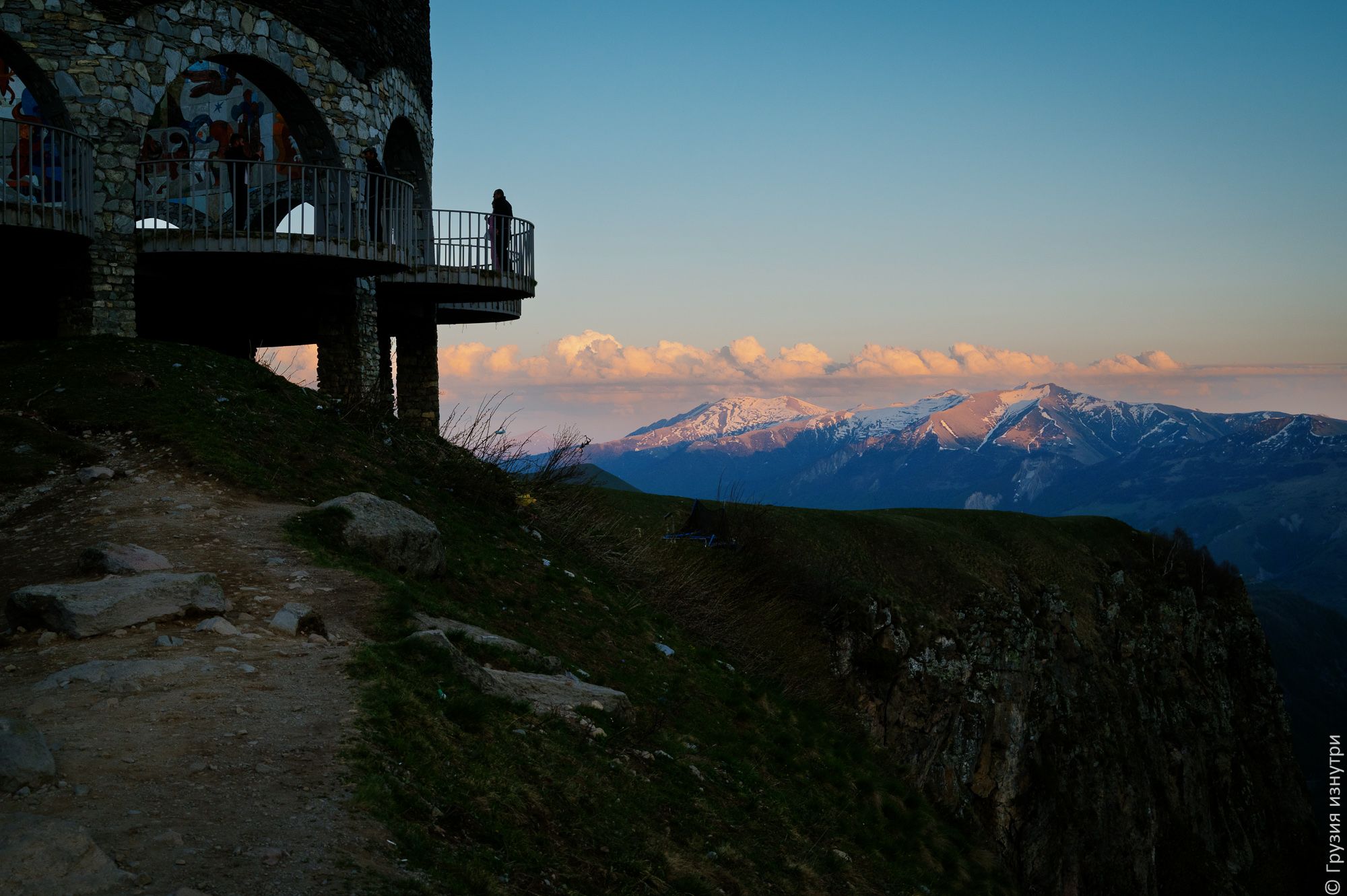
Our last stop on the trip was the Russia–Georgia Friendship Monument, perched on the edge of a deep gorge along the Georgian Military Highway, not far from the Jvari Pass.
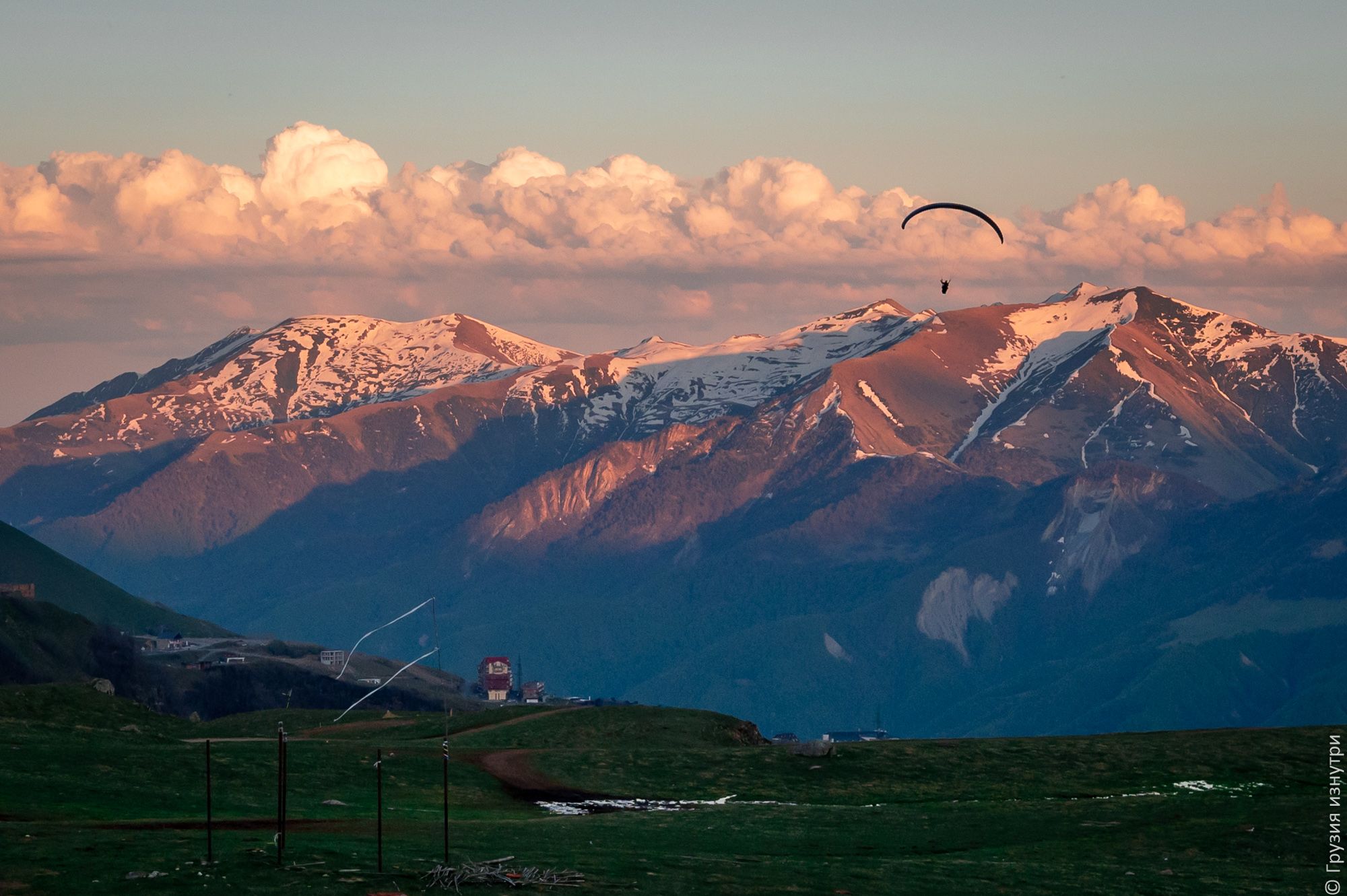
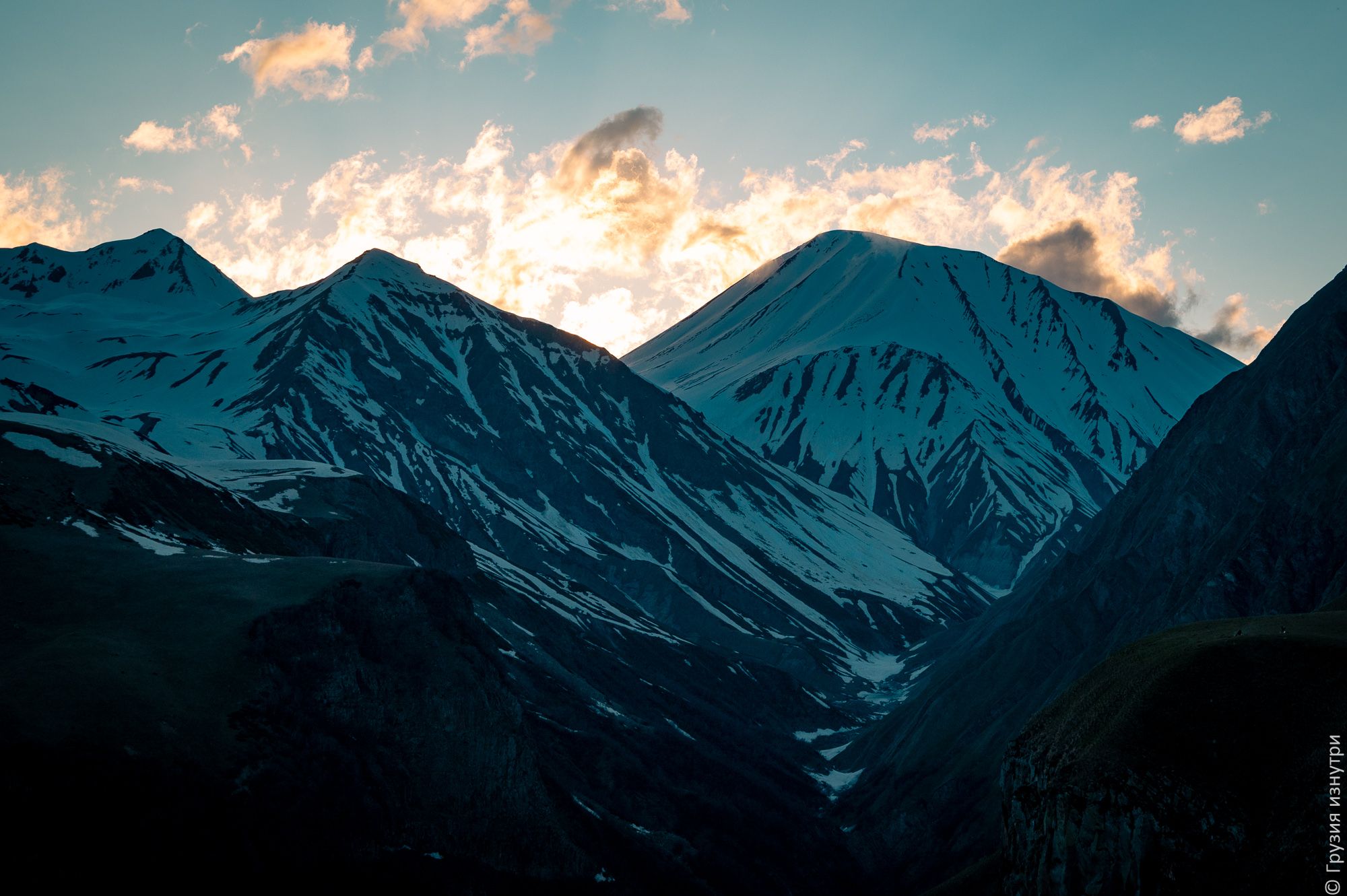
From the monument, you can climb down and walk across the dirt to get almost right up to the edge of the cliff.
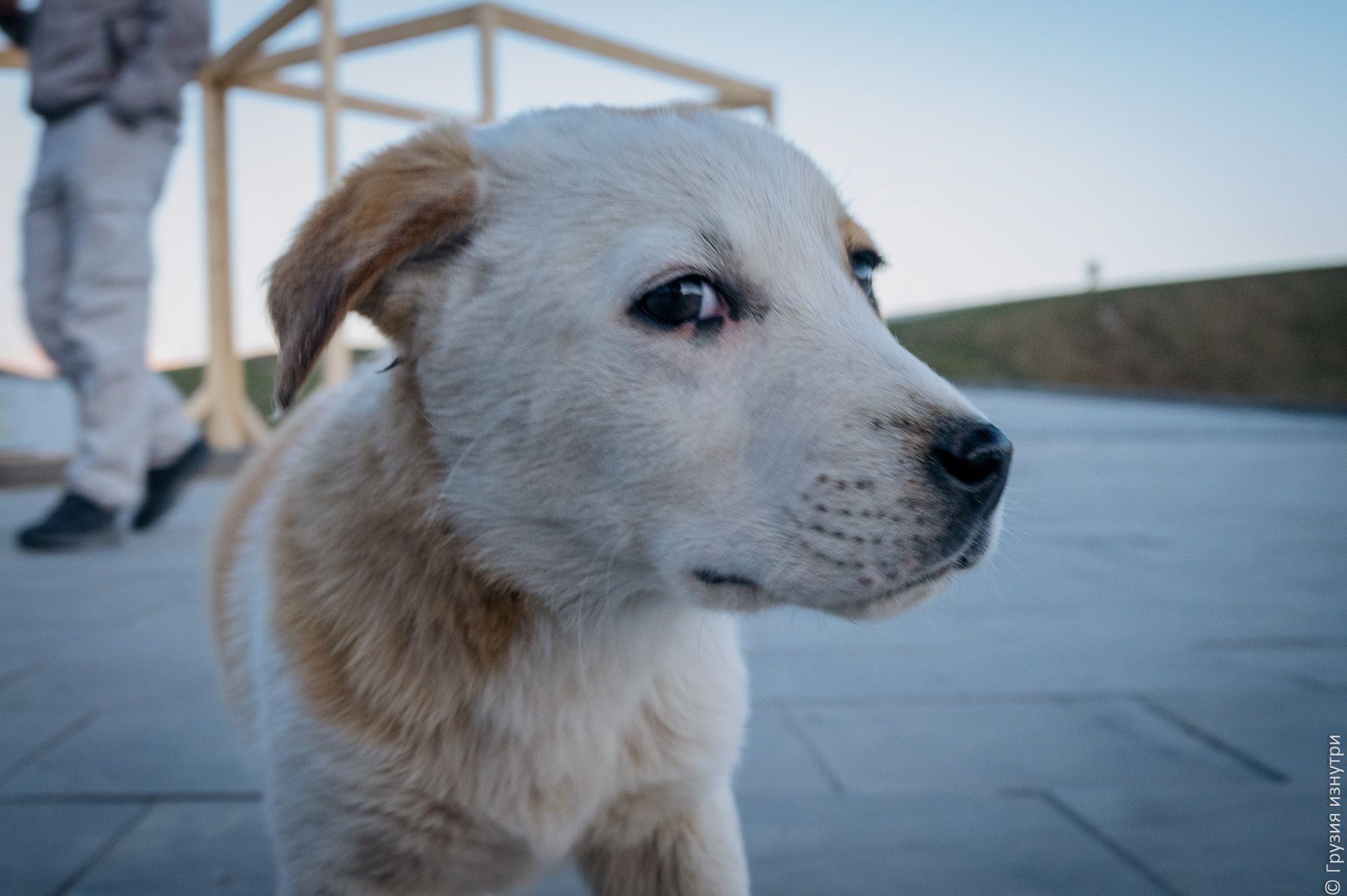
And we also managed to have a chat there with one of the local residents.
On the way back, we were completely wiped out, but also very довольны — we’d managed, all in one day, to see a reservoir, an ancient fortress, the confluence of two rivers of different colors, cross a mountain pass, take in the mountain peaks, hike to a waterfall, and have a great dinner with a mountain view. So it’s no surprise that we slept through most of the drive back. We got back to Tbilisi after dark.